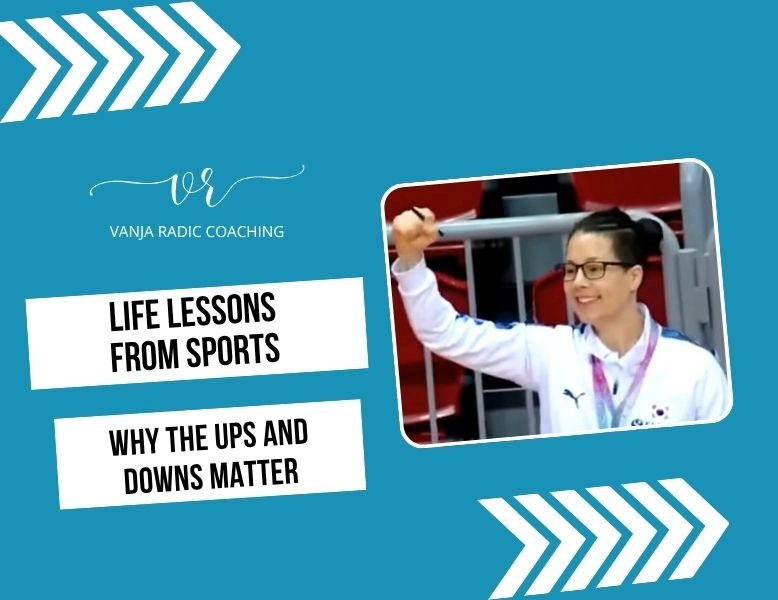
Life Lessons from Sports: Why the Ups and Downs Matter
There’s something remarkable about what happens inside a sports arena that doesn’t happen quite the same way anywhere else in life. The joy of success and the sting of failure arrive faster, hit harder, and teach deeper than almost any other human experience. The life lessons from sports come not despite the emotional intensity but because of it.
I’ve spent years coaching athletes and watching this phenomenon unfold. A goalkeeper makes a brilliant save and experiences a surge of pure joy. Seconds later, the ball rebounds, the opponent scores, and that joy transforms into disappointment so quickly that the body barely has time to process the first emotion before the second one arrives.
This compression of emotional experience is one of the greatest gifts that sport offers to those who participate in it. And it’s something I believe every coach, parent, and athlete should understand deeply.
Key Takeaways
- Sports compress life’s emotional experiences into concentrated form. What might take years to experience emotionally in ordinary life happens in hours or days in sports. This acceleration builds emotional capacity faster than almost any other experience.
- The fast alternation between joy and disappointment is a feature, not a problem. Learning to handle quick emotional transitions prepares athletes for when life delivers similar patterns outside of sports.
- Resilience is built through repetition, not avoidance. Every time an athlete faces difficulty and returns to compete again, their resilience grows. Sports provide countless opportunities for this kind of building.
- Learning reframes losing. When growth becomes the primary goal, every experience, whether externally successful or not, contains value. There is no losing when the focus is on learning.
- The emotional skills built through sports last beyond athletic careers. The capacities developed through handling sports’ ups and downs become permanent resources for handling life’s bigger challenges.
Why Sports Compress Life’s Emotional Experiences
In everyday life, we experience ups and downs spread across days, weeks, months, and years. We get good news and enjoy it for a while. Bad news arrives later, and we process that too. The emotional waves have space between them. We can recover before the next one hits.
Sports don’t work this way. In a single match, an athlete might experience hope, fear, triumph, frustration, pride, disappointment, relief, and despair. These emotions don’t politely wait their turn. They crash into each other, overlap, and sometimes arrive simultaneously.
Life lessons from sports emerge from this intensity. When you experience the full range of human emotion compressed into ninety minutes, or sixty minutes, or even a single play, you develop emotional capacities that take much longer to build in ordinary life.
Think about what happens during a close game. Your team falls behind, and you feel the weight of being down. You fight back, tie the score, and the relief floods through you. You take the lead, and suddenly hope and excitement rise. Then the opponent equalizes, and you’re back to uncertainty. All of this might happen in the span of fifteen minutes.
Where else in life do you get this kind of emotional training? Where else do you practice recovering from disappointment so quickly? Where else do you learn to manage joy without becoming complacent or handle fear without becoming paralyzed?
The Core Insight: Ups and Downs at Accelerated Speed
The core insight I want to share is this: sports give us life’s emotional curriculum at accelerated speed.
Everything that life will eventually teach you about handling success and failure, managing disappointment, celebrating victory without arrogance, processing loss without destruction, sports teach you faster and more intensely.
Life lessons from sports are essentially life lessons delivered in concentrated form. A young athlete who plays competitive sports for several years experiences more emotional ups and downs than many adults experience in a decade of ordinary living.
This isn’t hyperbole. Think about what a single season contains. Wins and losses. Performances you’re proud of and performances you wish you could forget. Moments when everything clicks and moments when nothing works. Praise from coaches and criticism. Starting positions earned and lost. Injuries overcome and setbacks endured.
All of this emotional content arrives within months, not years. The athlete doesn’t have time to build walls between these experiences. They have to develop the capacity to handle them as they come, one after another, sometimes one on top of another.
This is why I believe sports are one of the most powerful developmental experiences available to young people. Not because of the physical fitness or the skills learned, though those matter too. But because of the emotional development that happens through constant exposure to the full spectrum of human feeling.
Why This Matters for Young Athletes
Let me speak directly about why life lessons from sports are especially valuable for young athletes and why parents and coaches should understand this dimension of what sport provides.
Young people are building their emotional architecture. They’re developing the systems they’ll use for the rest of their lives to process experience, handle difficulty, and respond to both success and failure. The experiences they have during these formative years shape how these systems develop.
Sports provide an ideal training ground for emotional development because the stakes are real but not catastrophic. Losing a match hurts, but it doesn’t ruin your life. Making a mistake in front of teammates is embarrassing, but you’ll have another chance tomorrow. The consequences are significant enough to generate genuine emotion but contained enough to allow recovery and growth.
This is different from the emotional experiences that come from, say, academic failure or family difficulties. Those experiences also teach, but they often carry consequences that extend far beyond the lesson itself. Sports create a bounded space where emotional intensity can be experienced and processed with fewer lasting risks.
Life lessons from sports also come with built-in repetition. In school, you might get one chance at a major exam. In sports, you have games every week. Each game is another opportunity to practice handling pressure, managing emotions, and recovering from setbacks. This repetition is how emotional skills become ingrained.
Building Resilience Through Repetition
Resilience isn’t something you’re born with or without. It’s something you build through repeated experience of facing difficulty and discovering that you can handle it.
Sports provide endless opportunities for this kind of building. Every practice, every match, every season contains moments of difficulty. And every time an athlete faces those moments and comes through them, their resilience grows slightly stronger.
Life lessons from sports include the deep understanding that setbacks are survivable. This might sound obvious, but it’s not obvious to someone who hasn’t experienced it. Many people go through life trying to avoid all failure because they’re not sure they could handle it. Athletes know they can handle it because they’ve handled it hundreds of times.
I’ve watched young goalkeepers face devastating moments. They let in a goal they should have saved. They made a mistake that cost their team a match. They failed in front of people who mattered to them. And then I watched them come back the next day and stand in goal again.
That willingness to return, to expose yourself again to the possibility of failure, this is resilience in action. And it’s developed through the specific life lessons from sports that can’t be taught in a classroom or learned from a book.
Learning to Process Disappointment and Joy
One of the most valuable emotional skills that sports develop is the ability to process both disappointment and joy without being destroyed by either one.
Disappointment in sports arrives frequently. You can’t win every match. You can’t perform your best every time. You can’t always avoid mistakes. Learning to experience disappointment, feel it fully, and then move forward is a crucial life skill.
Life lessons from sports teach this skill because there’s always another game coming. You don’t have the luxury of wallowing indefinitely in your disappointment. The next match is in a few days. You have to find a way to process what happened and prepare for what’s next.
Joy requires its own kind of processing. Success in sports feels wonderful, but it can also create problems if not handled well. Arrogance after winning alienates teammates and coaches. Overconfidence leads to poor preparation for the next challenge. The high of victory can be addictive in ways that undermine long-term development.
Athletes learn to celebrate success without losing themselves in it. They learn that today’s victory doesn’t guarantee tomorrow’s success. They learn to enjoy the moment while staying grounded enough to keep working. These are sophisticated emotional skills that many adults never fully develop.
The Deeper Lessons: Learning vs. Losing
Now let me share some of the deeper wisdom that sports reveal to those who pay attention.
Notice that there’s no “losing” in a loss or in a mistake if the main focus is on learning. This reframe changes everything about how you experience setbacks in sports and in life.
Life lessons from sports include understanding that every experience, whether externally successful or unsuccessful, contains learning. The question isn’t whether you won or lost. The question is what you learned. When learning becomes the primary goal, losing becomes a different kind of winning.
This doesn’t mean losses don’t hurt. They do. It doesn’t mean athletes shouldn’t care about outcomes. They should. But underneath the caring about outcomes is a deeper orientation toward growth that transforms how setbacks are experienced.
Learning curves in sports (and in life) are never only straight and never only upward. Progress happens in waves. You improve, then plateau, then sometimes get worse before getting better again. Understanding this rhythm saves athletes from the despair that comes from expecting constant linear improvement.
Learning implies being willing to change, and every change is painful and uncomfortable. This is another deep lesson that sports teach with particular clarity. The technique adjustment that will make you better feels awkward at first. The new tactical understanding requires letting go of old habits. Growth requires discomfort, and sports provide constant opportunities to practice embracing that discomfort.
Embracing Discomfort and Trusting the Process
Athletes who develop well learn to embrace discomfort rather than avoid it. They learn that the uncomfortable feeling of pushing limits is actually the feeling of growth. They learn to trust the process even when results aren’t immediately visible.
Life lessons from sports include this crucial understanding: short-term discomfort often leads to long-term improvement. The challenging training session that leaves you exhausted is building capacity. The correction from a coach that stings your ego is improving your technique. The loss that hurts your pride is revealing what you need to work on.
Trust becomes essential because you can’t always see where the process is leading. You have to believe that the work you’re doing today will produce results you can’t yet perceive. This kind of trust is developed through experience, by putting in the work and eventually seeing the results, even when the timeline is longer than you wished.
Sports teach patience in ways that are hard to find elsewhere. The improvement you want might take months or years. You have to keep working without immediate gratification. This is excellent preparation for meaningful pursuits in life, which almost always require sustained effort without guaranteed outcomes.
A Specific Story: The Penalty Save That Became a Goal
Let me share a specific moment that captures everything I’ve been describing. I was coaching a goalkeeper in a match where we faced a penalty situation. We had prepared for this. We had a tactical plan based on our analysis of the opponent. My goalkeeper trusted the plan and executed exactly what we had worked on together.
He saved the penalty.
The joy that flooded through me in that instant was intense. Pride in my goalkeeper for trusting the plan. Excitement about the save itself. Relief that our preparation had paid off. All of this arrived at once in a rush of positive emotion.
And then, within seconds, everything changed.
The ball rebounded after the save. The opponent was positioned perfectly to collect it. Before anyone could react, they had scored. The save that should have been our triumph became nothing… The opponent celebrated while we processed what had just happened. Also, as some of you could probably understand from the video – wholeheartedly, I said a few Bosnian “prayers” during those disappointing moments. 😉 😀
Life lessons from sports were on full display in that moment. In the span of maybe five seconds, I experienced ecstatic joy followed by crushing disappointment. The emotional distance between those two states is enormous, and I traveled it almost instantaneously.
What This Teaches: The Beauty of Extremes Close Together
Here’s what that moment, and countless similar moments across sports, teaches us.
The proximity of joy and disappointment is actually a gift. When you experience both extremes so close together, you learn something important: neither state is permanent. Joy doesn’t last forever, but neither does disappointment. The emotional waves keep coming, and your job is to ride them without being destroyed by either the highs or the lows.
Life lessons from sports include this profound understanding of impermanence. The match that feels so important right now will be history tomorrow. The save that felt so significant will be one of thousands you make in your career. The disappointment that seems overwhelming will fade as new experiences arrive.
This doesn’t diminish the importance of the moment. It contextualizes it. You can feel deeply while also maintaining perspective that prevents the feeling from consuming you entirely.
For young athletes especially, learning to handle these rapid emotional transitions is incredibly valuable. Life will bring them moments where joy turns to sorrow quickly, where success is followed immediately by failure, where they think they’ve achieved something only to have it taken away. The athlete who has experienced this pattern many times in sports is better prepared for when it happens in bigger life contexts.
The Gift Sports Give Us: Preparation for Life’s Bigger Challenges
Sometimes in order to take some of the biggest leaps in life, we need to experience the total opposite first. Total collapse. Total breakdown. Total failure.
Life lessons from sports prepare us for this reality. In the space of collapse or failure, we have time to process and integrate what we’re learning. We have time to gather enough strength and willpower to get up again and continue moving forward.
Sports teach us that getting up after being knocked down is possible because we practice it repeatedly. The goalkeeper who lets in a bad goal has to face the next shot anyway. The basketball player who misses the crucial free throw has to step to the line again next time. The runner who fails to reach their goal time has to show up for tomorrow’s training.
This practice of rising after falling is one of the most valuable capacities humans can develop. And sports develop it systematically through repeated exposure to falling and the necessity of rising again.
The deeper the collapse, the greater and higher the leap becomes possible. This is a paradoxical truth that sports reveal clearly. The moments of greatest failure often precede the moments of greatest growth. The season that went terribly wrong motivates the transformation that leads to future success. The devastating loss fuels the determination that produces future victories.
What Parents and Coaches Should Understand
If you’re a parent or coach reading this, I want you to understand what you’re actually providing when you involve young people in sports.
You’re not just giving them physical activity or teaching them skills. You’re providing them with an accelerated emotional education. You’re giving them experiences that will shape how they handle everything life throws at them.
Life lessons from sports are real and lasting. The athlete who learns to process disappointment quickly doesn’t forget how to do this when they leave sports. The person who learns to handle pressure in competition carries that capacity into job interviews, difficult conversations, and high-stakes decisions.
Your role as parent or coach is to help young athletes extract the lessons from their experiences. The experiences themselves will provide the raw material. Your guidance helps them understand what they’re learning and how it applies beyond the sports context.
This means talking about more than just technique and tactics. It means discussing how they felt after the difficult match. It means exploring what they learned from the mistake. It means celebrating growth in emotional capacity as much as growth in athletic performance.
Closing: Always Remember How Far You’ve Come
Always remember to be proud of how far you’ve come.
This applies to athletes, coaches, and anyone navigating life’s ups and downs. The journey you’ve traveled, with all its victories and defeats, its joys and disappointments, has shaped you into who you are now.
Life lessons from sports don’t stop teaching when you stop playing. The capacities you build through athletic experience stay with you. The resilience, the emotional range, the ability to recover from setbacks, these become permanent parts of who you are.
For young athletes still in the middle of their sports journey, know that what you’re experiencing matters beyond the scores and standings. Every difficult moment is building something in you. Every recovery from disappointment is strengthening your capacity for future recoveries. Every experience of the emotional rollercoaster is preparing you for life’s bigger rides.
And for those of us who coach or support young athletes, remember that we’re doing something important. We’re not just running practices and games. We’re providing opportunities for human development that will matter long after the last whistle blows.
The ups and downs of sports are not obstacles to navigate around. They are the point. They are the curriculum. They are the gift.
Embrace them all. 🙂
Stay in Touch
Do you have any coaching challenges you’d like me to address? Let me know what topics you struggle with most in goalkeeper coaching by filling out this form.
Never miss an update
Subscribe to my newsletter to receive updates about my online and in-person projects, research papers, creative projects (blog posts, books, e-books), and new online programs.
My Online Video Courses:
– Level 1 Video Course for Coaches
– Level 2 Video Course for Coaches
– Sliding Technique Video Course
– Agility Ladder Drills Video Collection – 102 drills
Subject to Copyright
Unauthorized use and/or duplication of any content from this website without express written permission from this site’s owner is strictly prohibited. All content (including text, data, graphics files, images, illustrations, videos, and sound files) contained in www.vanjaradic.fi is copyrighted unless otherwise noted and is the property of Vanja Radic Coaching. If you wish to cite or use any content from my website, please contact me first to obtain permission.
No responses yet