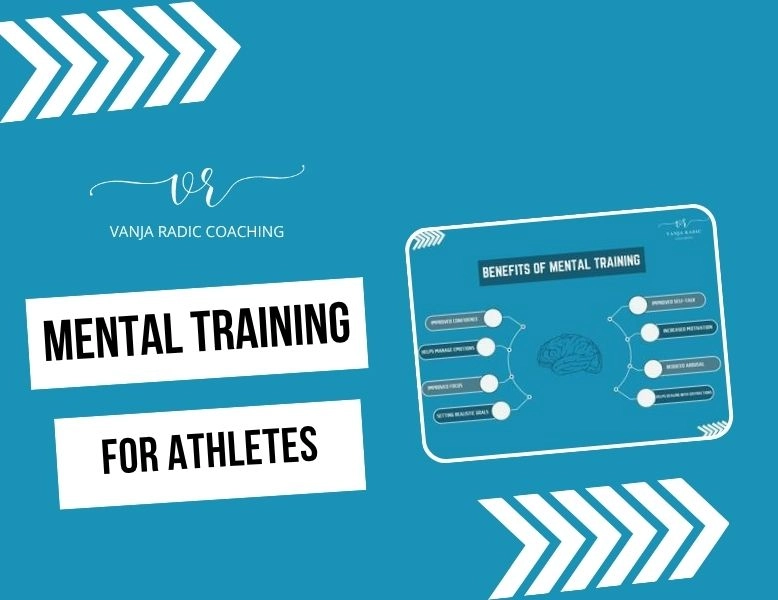
Mental Training For Athletes
Mental training for athletes has always been something that deeply interested me and something I’ve always included in my coaching work. Although my primary experience has been coaching handball goalkeepers and educating goalkeeper coaches across more than 30 countries over the past 15 years, the mental training strategies I’ve used apply to all athletes in every sport.
I can’t even count how many times I’ve been contacted by athletes, coaches, and parents about what they describe as a “mysterious” situation. The stories all sound similar: “I have no idea what’s happening, but in the last few games I’ve significantly underperformed. I can’t even do the easy things anymore. Can you help me?”
When I assess their situation, I always ask what mental training tools they’ve used so far. The answer is almost always: “What do you mean by mental training tools?”
This response confirms something I’ve witnessed throughout my career. Despite all we know about the importance of psychological preparation, mental training for athletes remains marginalized in most training programs. Athletes and coaches invest enormous effort in physical conditioning while leaving the mind almost entirely untrained. Then they wonder why performance collapses when it matters most.
My intention with this article is to bring clarity and understanding to this topic so more athletes can maximize their performance by developing their mental capacity alongside their physical ability.
Key Takeaways
- The mind-body connection is biological reality, not philosophical concept. What happens mentally directly affects physical performance, and this connection can be deliberately used to support athletic excellence. You can’t train one while ignoring the other.
- Mental skills are trainable, not fixed personality traits. Focus, confidence, resilience, emotional regulation, and performance under pressure can all be developed through specific techniques practiced consistently over time.
- Mental training addresses the factors that often determine competitive outcomes. At higher levels, physical differences between athletes are minimal. The athletes who consistently win are those who can execute their physical skills under psychological pressure.
- Common mental challenges like performance spirals, pre-competition anxiety, and loss of motivation have specific solutions. Mental training provides practical tools for addressing these issues rather than hoping they’ll resolve on their own.
- Implementation requires consistency and integration rather than complexity. Starting with a few techniques, practicing them regularly, and integrating them with physical training produces better results than attempting many things sporadically.
The Undeniable Mind-Body Connection
Before we go further, I want to establish something fundamental: you can’t separate the mind and the body. What happens mentally directly affects physical performance, and what happens physically directly affects mental state. This connection is not philosophical speculation. It’s biological reality.
When you’re stressed or nervous, your body responds immediately. Your heart pounds faster. Your muscles tighten. Blood pressure rises. Breathing becomes quick and shallow. Palms start sweating. These physical changes happen automatically in response to mental state.
The relationship works the other way too. When you feel confident, your posture changes. You stand taller. Your movements become more fluid. Your facial expression shifts. These physical changes reinforce the confident mental state.
Mental training for athletes works by deliberately using this connection. You can use mental techniques to influence physical state, and you can use physical techniques to influence mental state. Understanding this connection is the foundation of all mental performance work.
When an athlete tells me “I was in peak physical condition but I just couldn’t perform,” this mind-body connection explains why. The physical capability was there, but the mental state blocked access to it. All the training in the world doesn’t help if anxiety, doubt, or poor focus prevents the athlete from executing what they’ve trained.
What Mental Training Actually Is
Mental training for athletes is the systematic development of psychological skills that support consistent high-level performance. It’s not mystical. It’s not just “thinking positive.” It’s specific, trainable capacities that can be developed through practice, just like physical skills.
These mental skills include focus, confidence, emotional regulation, resilience, motivation, and the ability to perform under pressure. Each of these can be broken down into components that can be practiced and improved over time.
The goal of mental training is to prepare your mind to help you consistently perform at your best. Many coaches avoid this topic because it seems too complex or too “soft.” But learning to apply elements of mental training in your work is not as extremely complex as it seems. The basics are accessible to any coach or athlete willing to invest some time in understanding them.
What makes mental training powerful is that it addresses the factors that often determine the difference between good and great. At the elite level, physical capabilities among top athletes are similar. The athletes who consistently win are those who can execute their physical skills under the psychological pressure of competition. This mental capacity is what separates those who have the potential from those who realize it.
Why Athletes Need Mental Training Now More Than Ever
Something I’ve noticed throughout my coaching career is a significant shift in how young athletes handle difficulty. There’s a widespread lack of mental resilience that affects performance, development, and even whether athletes continue in their sport.
In my work across more than 30 countries with thousands of athletes, I’ve had to deal with so many being unable to overcome their inner blockages. The recurring issue is lack of mental strength and stamina, lack of resilience, and lack of persistence. Athletes who have genuine physical talent struggle to progress because they can’t handle the psychological challenges of development.
Why is this happening? Part of it is that life has become easier in many ways than it used to be. Young people today often don’t face the same kinds of challenges that previous generations faced routinely. This isn’t a criticism. It’s an observation. Mental strength, perseverance, and resilience are learned through facing challenges, through learning to fail, and through succeeding after failure. When those experiences are limited, the mental skills don’t develop naturally.
I grew up in a war. Despite being extremely traumatizing, that experience taught me valuable life skills that helped me in every aspect of life. My coaches never needed to motivate me to try a new movement or step out of my comfort zone. I was always ready to overcome my own beliefs about what was possible because I had already survived situations where overcoming seemed impossible.
I’m not suggesting everyone needs to experience trauma to develop mental strength. That would be absurd. What I’m saying is that mental training for athletes provides an alternative path. It allows athletes to develop these crucial skills proactively, through deliberate practice, rather than requiring extreme life circumstances to build them.
Mental factors like self-belief, confidence, focus, resilience, and motivation are crucial to athletic performance. Mental training gives athletes strategies and exercises to work on these qualities intentionally. Without this work, athletes are left hoping they’ll develop mental strength naturally. Some do. Many don’t.
The Real Benefits of Mental Training
Let me be specific about what mental training for athletes actually provides. These aren’t abstract concepts. They’re practical capabilities that directly affect performance.
Focus and Concentration That Survives Pressure
Athletes perform in highly distracting environments. Crowds screaming. Opponents trying to disrupt. Coaches yelling instructions. Internal thoughts racing. In this chaos, maintaining focus on what matters is incredibly difficult.
Mental training develops the ability to maintain attention on performance-relevant cues while filtering out everything else. This isn’t general alertness. It’s targeted concentration that remains sharp even when emotional pressure is high.
The athlete with trained focus can execute technique correctly when it matters most because their attention is where it needs to be. The athlete without this skill gets pulled in multiple directions mentally and their execution suffers as a result.
Confidence That Doesn’t Depend on Recent Results
Confidence is one of the strongest predictors of athletic success. Confident athletes make decisions more quickly, commit more fully to actions, and recover faster from setbacks. But natural confidence is unstable. It rises when things go well and crashes when they don’t.
Mental training builds a different kind of confidence, one based on preparation, competence, and healthy self-perception rather than recent performance. This internal confidence remains available even after difficult games because it’s not dependent on external results.
Through specific techniques like positive self-talk and mental imagery, athletes can reinforce their self-belief and maintain a constructive attitude toward their performance regardless of current circumstances.
Stress and Anxiety Management
Competitive sports create significant stress and anxiety. The pressure of important moments, the fear of failure, the weight of expectations. These psychological experiences can dramatically impair performance if not managed effectively.
Mental training for athletes provides specific strategies for handling these states. Techniques like deep breathing, relaxation exercises, and cognitive restructuring help athletes transform anxiety into useful energy rather than destructive interference.
The athlete who has practiced these techniques enters competition knowing they have tools to manage whatever emotional states arise. This knowledge itself reduces anxiety because the athlete isn’t helpless in the face of their own psychology.
Motivation That Sustains Through Difficulty
Every athletic journey involves periods of difficulty. Plateaus where improvement stalls. Injuries that require painful rehabilitation. Losses that hurt deeply. Seasons that don’t go as planned.
What sustains athletes through these periods is motivation, the drive to continue despite difficulty. But motivation fluctuates naturally. Sometimes it’s strong, sometimes it disappears entirely.
Mental training helps athletes develop more stable motivation by connecting daily effort to meaningful goals and by fostering intrinsic motivation that doesn’t depend entirely on external rewards or results.
Recovery From Setbacks and Injuries
The mental aspect of recovering from sports injuries is often as challenging as the physical recovery. Frustration, impatience, depression, fear of reinjury. These psychological experiences can extend recovery time and prevent full return to performance.
Mental training provides athletes with the psychological tools needed to cope with these difficulties. It helps maintain a positive outlook during rehabilitation, manage the emotional challenges of being unable to compete, and approach return to sport with appropriate confidence rather than debilitating fear.
Consistency Under Varying Conditions
One of the marks of elite athletes is their ability to perform consistently regardless of external conditions. Different venues, different opponents, different weather, different stakes. Their performance remains reliable.
This consistency comes from mental preparation. Athletes who develop psychological strategies and pre-performance routines can achieve similar mental states regardless of external circumstances. They’re not dependent on conditions being “right” to perform well.
Mental training for athletes develops this consistency by establishing internal anchors that provide stability when external factors vary.
Resilience That Grows Stronger Through Adversity
Mental toughness allows athletes to persevere through difficulties, overcome obstacles, and remain determined toward their goals. This resilience is crucial for maintaining performance throughout competitions and careers.
What’s remarkable is that resilience can be trained. Athletes can deliberately develop greater capacity to bounce back from disappointments and maintain high performance even under adversity. This isn’t just personality. It’s skill.

What Mental Struggles Actually Look Like
Let me describe some common mental challenges athletes face. Understanding these patterns helps identify when mental training is needed.
The Performance Spiral
An athlete makes a mistake early in competition. Instead of letting it go, they dwell on it. Their focus shifts from the current moment to the past. Tension increases. Confidence drops. The next action is compromised by this mental state. Another mistake follows. The spiral accelerates.
This pattern is incredibly common and incredibly destructive. One small setback turns into complete collapse not because of physical limitation but because of psychological response.
Mental training breaks this spiral by teaching athletes to reset after mistakes, to compartmentalize, to stay present rather than getting trapped in the past.
Pre-Competition Anxiety That Depletes
Some athletes experience intense anxiety before important competitions. Hours before the event, their minds are racing through worst-case scenarios. Their bodies are showing stress responses. By the time competition starts, they’re already exhausted from the psychological experience.
This anxiety usually comes from caring deeply about performance combined with uncertainty about outcomes. It’s actually a sign of investment, not weakness. But unmanaged, it destroys the performance the athlete cares so much about.
The Talent Plateau
An athlete has obvious physical gifts but can’t seem to reach the level their talent suggests is possible. They perform well in training but not in competition. They have good games but can’t string them together consistently. Everyone agrees they have potential but that potential never fully materializes.
Often, what’s missing is mental capacity. The physical talent is there but it can’t be accessed reliably under competitive pressure. Without mental training, the athlete remains permanently below their potential.
Loss of Joy and Motivation
An athlete who once loved their sport starts to dread it. Training feels like obligation. Competition feels like threat. The intrinsic enjoyment that originally drew them to the sport has disappeared.
This loss of joy often comes from psychological patterns that have developed over time. Excessive pressure, fear-based motivation, perfectionism, external expectations that overshadow internal experience. Mental training can help identify and address these patterns, sometimes restoring the joy that made the sport worth pursuing.
Core Techniques in Mental Training
Mental training for athletes encompasses many specific techniques. Here are some of the most valuable, with explanation of how they work.
Goal Setting That Actually Drives Performance
Effective goal setting is more sophisticated than simply deciding what you want to achieve. It involves establishing goals that are specific enough to guide action, challenging enough to motivate effort, and structured in ways that provide feedback on progress.
The most useful approach involves multiple layers: process goals that focus on specific behaviors and techniques, performance goals that target measurable improvements, and outcome goals that describe desired results. Athletes should spend most mental energy on process goals because these are most controllable.
Good goal setting creates a clear roadmap for training, provides motivation during difficult periods, and generates a sense of accomplishment as targets are met.
Visualization That Creates Real Preparation
Visualization, or mental imagery, involves creating vivid mental experiences of successful performance. The brain doesn’t clearly distinguish between intensely imagined experiences and real ones, so visualization creates neural pathways similar to those created by actual practice.
Effective visualization goes beyond simply picturing success. It engages all senses: seeing the environment, hearing the sounds, feeling the movements, experiencing the emotions. The more vivid and detailed the imagery, the more powerful its effect.
Athletes can use visualization to rehearse skills, prepare for specific competitive situations, build confidence, and recover from setbacks by mentally experiencing successful returns to form.
Self-Talk That Supports Rather Than Undermines
The internal conversation in your head affects everything about your performance. Negative self-talk increases anxiety, undermines confidence, and disrupts focus. Positive self-talk provides support, maintains confidence, and keeps attention where it belongs.
Changing self-talk patterns requires first becoming aware of what you actually say to yourself, then deliberately replacing unhelpful thoughts with more supportive alternatives. This isn’t about denying reality or forcing artificial positivity. It’s about choosing internal responses that support performance rather than destroy it.
Relaxation and Arousal Regulation
Athletes perform best at optimal arousal levels, not too activated, not too relaxed. Different situations require different levels. A power lifter attempting a maximum effort needs high arousal. A golfer making a delicate putt needs low arousal.
Mental training for athletes includes techniques for both increasing and decreasing arousal as needed. Deep breathing, progressive muscle relaxation, and meditation help reduce excessive activation. Energizing self-talk, physical movement, and powerful imagery help increase activation when needed.
The ability to regulate arousal gives athletes control over their physiological state rather than being at the mercy of circumstances.
Concentration Training
Focus is a trainable skill, not a fixed trait. Through specific exercises, athletes can improve their ability to concentrate on relevant cues while ignoring distractions.
These exercises might involve focusing on specific sensory inputs, practicing returning attention when it wanders, or using cue words that trigger focused states. With practice, concentration becomes more reliable and sustainable even under pressure.
Pre-Performance Routines
Consistent routines before performance create psychological stability. When external conditions vary, the routine provides something constant. This constancy helps athletes achieve similar mental states regardless of circumstances.
Pre-performance routines might include physical warm-up sequences, visualization sessions, breathing exercises, or specific rituals that signal readiness to perform. The specific content matters less than the consistency with which it’s applied.
Cognitive Restructuring
Cognitive restructuring involves identifying and challenging thought patterns that undermine performance. Athletes often have habitual ways of interpreting situations that create unnecessary difficulty. “I always choke under pressure.” “If I make a mistake, it means I’m not good enough.” “Everyone is watching and judging me.”
These interpretations feel like facts but they’re actually choices. Cognitive restructuring teaches athletes to recognize these thoughts, evaluate them objectively, and replace them with more accurate and supportive interpretations.
Mindfulness and Present-Moment Awareness
Mindfulness practices help athletes stay present rather than getting lost in thoughts about past mistakes or future outcomes. By focusing on the current moment, athletes avoid the anxiety that comes from projecting into the future and the regret that comes from dwelling on the past.
Regular mindfulness practice develops the ability to notice when attention has wandered and return it to the present. This skill is invaluable in competition where staying present determines performance quality.
Who Benefits From Mental Training
The short answer is: everyone. Mental training for athletes applies to any level, any age, any sport. But let me be more specific about different populations.
Young Developing Athletes
Young athletes benefit enormously from mental training because the skills they develop early become foundations for their entire athletic career. Teaching mental skills alongside physical skills from the start creates athletes who are better prepared for the psychological demands of higher-level competition.
Young athletes who learn to handle pressure, manage mistakes, and maintain confidence during their developmental years carry these skills forward as they progress.
Elite and Professional Athletes
At the elite level, physical differences between athletes are minimal. Everyone has trained their bodies to near maximum potential. The differentiating factor is often mental, the ability to execute physical skills under extreme competitive pressure.
Mental training for athletes at this level refines psychological skills that may have developed informally and adds sophisticated techniques for the specific challenges of elite competition.
Athletes Recovering From Injury or Setback
The psychological challenge of recovery is often underestimated. Mental training provides tools for managing the difficult emotions that accompany injury, maintaining motivation through rehabilitation, and approaching return to sport with appropriate confidence.
Athletes Experiencing Performance Issues
When performance suddenly declines without physical explanation, mental factors are usually involved. Mental training can identify and address the psychological patterns causing the decline.
Coaches and Support Staff
This might surprise some readers, but mental training is extremely valuable for coaches too. Coaching involves enormous stress and emotionally challenging situations. The skills of emotional regulation, stress management, and maintaining focus under pressure benefit coaches as much as athletes.
I’ve used mental training techniques more as a coach than I ever did as a player. Knowing how to release stress and regulate emotions in healthy ways has been essential to my coaching effectiveness.
Implementing Mental Training in Your Work
If you’re convinced of the importance of mental training for athletes, the question becomes how to actually implement it. Here are practical suggestions.
Start With Education
Both athletes and coaches benefit from understanding what mental training is and why it matters. This understanding creates buy-in that makes the training effective. Without buy-in, mental training feels like an unwelcome addition rather than a valuable tool.
Integrate Rather Than Isolate
Mental training works best when integrated with physical training rather than treated as a separate activity. Use visualization during technical practice. Apply self-talk strategies during conditioning. Practice pre-performance routines before training exercises. This integration helps mental skills transfer to competition.
Build Gradually
Don’t try to implement everything at once. Start with one or two techniques, practice them until they’re comfortable, then add more. Building gradually allows athletes to actually develop skills rather than superficially attempting many things.
Create Consistent Practice Time
Mental skills require regular practice just like physical skills. Build specific time into your schedule for mental training. Even brief daily practice produces better results than occasional longer sessions.
Individualize the Approach
Different athletes have different mental strengths and weaknesses. Some struggle with anxiety while others need more activation. Some have confidence issues while others need better focus. Effective mental training addresses individual needs rather than applying generic approaches to everyone.
Track and Adjust
Keep some record of what you’re practicing and what effects you notice. This tracking helps identify what’s working and what needs adjustment. Review periodically and adapt your approach based on what you learn.
Seek Expertise When Needed
For complex issues or elite-level performance, working with a sports psychologist or mental performance consultant can accelerate development. These professionals can assess individual needs, customize approaches, and provide expertise that generalist coaches may lack.
The Research Behind Mental Training
This isn’t just my opinion or anecdotal experience. The effects of mental training for athletes have been studied extensively with strong results supporting its importance.
Research published in The Sport Journal found that visualization practice was “effective in enhancing running performance” in college runners. Studies have found that mental toughness, defined as an athlete’s ability to outperform competitors in managing demands and demonstrating consistency, drive, focus, confidence, and control under pressure, can be improved over time.
Research on successful Olympians, published in the Journal of Sports Sciences, found that elite performers have a high degree of self-confidence, are able to manage their arousal level and block out distractions, and are goal-oriented. These aren’t personality traits they were born with. They’re skills that can be developed.
The science is clear: mental training works. Athletes who develop psychological skills perform better, more consistently, and for longer careers than those who rely on physical training alone.
In Conclusion
Mental training for athletes is not supplementary to athletic training. It’s a fundamental component of achieving and sustaining high performance. The mind and body are inseparable in athletic performance, and training only one while ignoring the other leaves enormous potential unrealized.
By cultivating mental strength, focus, resilience, and constructive psychological patterns, mental training enables athletes to unlock their full potential. It transforms athletes who have ability into athletes who can express that ability when it matters most.
The athletes who reach the highest levels are those who train comprehensively. They develop their physical capabilities and their mental capabilities. They prepare their bodies and their minds. They understand that excellence requires both.
If you’re an athlete reading this, start working on your mental game. If you’re a coach, start incorporating mental training into your program. The investment will pay dividends that physical training alone can never provide.
Your mind is as trainable as your body. It deserves the same attention.
Stay in Touch
Do you have any coaching challenges you’d like me to address? Let me know what topics you struggle with most in goalkeeper coaching by filling out this form.
Never miss an update
Subscribe to my newsletter to receive updates about my online and in-person projects, research papers, creative projects (blog posts, books, e-books), and new online programs.
My Online Video Courses:
– Level 1 Video Course for Coaches
– Level 2 Video Course for Coaches
– Sliding Technique Video Course
– Agility Ladder Drills Video Collection – 102 drills
Subject to Copyright
Unauthorized use and/or duplication of any content from this website without express written permission from this site’s owner is strictly prohibited. All content (including text, data, graphics files, images, illustrations, videos, and sound files) contained in www.vanjaradic.fi is copyrighted unless otherwise noted and is the property of Vanja Radic Coaching. If you wish to cite or use any content from my website, please contact me first to obtain permission.
No responses yet