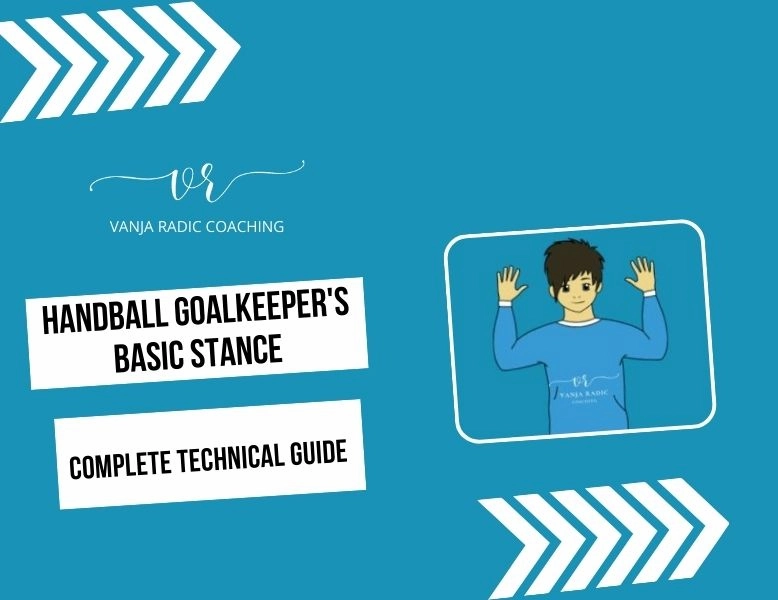
Handball Goalkeeper’s Basic Stance: Complete Technical Guide
The handball goalkeeper’s basic stance represents the most optimal body position that allows you to effectively use your body as a defensive area and react to high, middle, or low shots in the fastest and most practical way possible. This position is not static or arbitrary, it’s a carefully engineered foundation built on biomechanical principles that have been studied and refined by sports scientists and coaches across Europe’s top handball nations.
When you stand in proper basic stance, you’re creating what biomechanics researchers call an “optimal ready position” for your center of mass. Research published in the Journal of Sports Sciences shows that elite goalkeepers in this position can initiate movement approximately 193 milliseconds before the ball is released during distance shots, achieving a 67% save rate. In contrast, inexperienced goalkeepers who lack proper stance fundamentals move later and achieve only a 24% save rate, a striking difference that demonstrates just how critical this foundation is to your success.
Your basic stance serves as the launching pad for every save reaction you’ll make throughout a match. Think of it as your home base, the position you return to between shots, the position you maintain while reading the game during the opponent’s attacks, and the position from which all your save reactions originate. Without a solid basic stance, even the most athletic goalkeeper will struggle to maximize their defensive coverage or react efficiently to shots from various angles and distances.
The stance addresses several critical needs simultaneously. First, it positions your body to cover the maximum goal area (3 meters wide by 2 meters high) while maintaining the flexibility to move in any direction. Second, it keeps your center of mass balanced and mobile, ready to shift instantly as attacking players change positions or shooting angles. Third, it aligns your visual field with your hands, creating the eye-hand coordination pathway that allows for fast, accurate reactions.
Modern handball has evolved into an incredibly fast sport where attacking players shoot with extremely high speed and deception from multiple positions. Your basic stance must account for shots coming from backcourt players at 9 meters, wing players attacking from different width angles, and line players shooting from close range at 6 meters. Each shooting situation demands different adjustments, but they all start from the same fundamental, basic position.
Understanding why the stance works is just as important as knowing how to execute it. The slight forward lean activates your hip flexors and prepares your lower body muscles for explosive movement. The raised arms reduce the distance your hands must travel to reach high shots. The shoulder-width leg position provides a stable base while allowing fast lateral movement. Every element of the stance has a specific biomechanical purpose that contributes to faster reactions and more effective defensive coverage.
As goalkeeper training has become more sophisticated, particularly in handball powerhouse nations like Denmark, Germany, Norway, and France, coaches have recognized that technical fundamentals like basic stance have to be established early and maintained consistently. Proper positioning adapted to each game situation distinguishes successful top-level goalkeepers from average ones.
The basic stance is not meant to feel rigid or uncomfortable. When executed correctly, it should feel natural and balanced, a position you can hold comfortably for extended periods while remaining alert and ready. Your muscles should be engaged but not tense, your breathing relaxed, your focus sharp. You’re prepared and ready, but not strained.
This fundamental position serves as the foundation for all goalkeeper movements and save reactions. Master it, and everything else in your goalkeeper development becomes easier. Neglect it, and you’ll constantly struggle to overcome technical deficiencies that limit your effectiveness, no matter how much natural talent you possess.
Key Takeaways
- Proper Basic Stance Creates Faster Reactions – Your basic stance positions your body for explosive movement in any direction. Research shows expert goalkeepers achieve 67% save rates compared to just 24% for those without proper technique – the difference comes from positioning and visual processing, not pure speed.
- Peripheral Vision Is Critical – Position your palms near your head so you can see them with the corners of your eyes while looking at the shooter. This peripheral placement creates the eye-hand coordination pathway that allows for fast, accurate save reactions.
- Weight Distribution Matters – Keep your body weight on the front part of your feet (not toes, not flat). Combined with slightly bent knees and a slight forward lean, this allows instant push-off in any direction without wasted motions.
- Learn Fundamentals Before Developing Your Goalkeeper Style – Every goalkeeper must master correct basic technique first. Experienced goalkeepers earn the right to make adjustments because they have extensive knowledge to compensate for deviations. Build your individual style on top of solid fundamentals, not instead of them.
- Common Mistakes Delay Your Reactions – Avoid these mistakes: hands positioned too low, straight knees, legs too wide or too close, fingers pointed at the ball instead of palms open, and unnecessary hand movements before save reactions. Each mistake costs you precious milliseconds and reduces your defensive coverage.
Understanding the Basic Stance
Your basic stance is more than just standing in front of the goal. It’s a carefully balanced position that prepares your body for explosive movements in any direction. Research from Scandinavian handball programs shows that elite goalkeepers maintain this position with remarkable consistency, allowing them to react approximately 193 milliseconds before the ball is released during distance shots.
The basic stance creates what coaches call a “ready position”, your body is prepared to move into action the moment you read the shooter’s intentions. This position must allow you to cover the maximum goal area while maintaining the ability to move quickly and efficiently.
Essential Features of Proper Goalkeeper Stance

Upper Body Position
Arms and Elbows: Your upper arms should be raised but not tensed. When viewed from the side, your elbows align with your shoulders or position slightly in front of them. This placement is critical because it creates the shortest reaction path to shots in any direction while maintaining defensive coverage.
Avoid keeping your arms too low or too high. Arms positioned too low force you to waste precious milliseconds raising them for high shots. Arms held too high create unnecessary tension and reduce your ability to react quickly to low shots.
Please, keep in mind, besides some of the main features of the basic stance, every goalkeeper will have an individual interpretation and execution of the goalkeeper’s basic stance. And this will be goalkeeper’s personal technique style. It’s important to remember that not every goalkeeper will have exactly the same basic stance and exactly same position of arms, hands, and legs.
Hand and Palm Placement: Your palms should be positioned near your head so you can see them peripherally. This means while looking straight ahead at the shooter, you should be able to see your palms with the outside corners of your eyes. This peripheral vision is crucial for proper eye-hand coordination, the ability to guide your hand movements with your eyes.
Keep your palms open toward the ball with fingers widespread. This position creates maximum defensive area and allows for fast adjustments when and if needed. Young goalkeepers should carefully monitor their hand positions until proper form becomes automatic.
Core and Hip Position
Your core and back should remain straight with your body bent slightly forward at the hip joint. This forward lean activates your thigh abductors and creates a solid foundation for lateral movements. The slight forward tilt also shifts your center of mass, preparing you to push off explosively in any direction.
Think of your core as the central command center, it must remain stable and balanced to support fast movements of your limbs. A strong, stable core allows for faster weight transfers and more powerful save reactions.
Lower Body Foundation
Leg Width and Position: Position your legs no wider than shoulder-width apart. A wider stance reduces your ability to react efficiently to high shots and slows your lateral movement. Legs positioned too close together compromise your balance and stability.
Your knees should be slightly bent, which allows for fast activation of your front thigh muscles. These muscles play a crucial role in nearly all save reactions. Straight knees delay your reaction time because you must first bend them before pushing off in any direction.
Weight Distribution: Distribute your body weight equally on the front part of both feet, but not on your toes. Weight placement on the forefoot (the two front-thirds of your feet) allows for fast push-offs in any direction. Being completely on your toes reduces stability, while keeping your feet flat on the floor slows your reaction time.
Your feet should be parallel to the direction of the shot, and your body should be square to the shooter’s hand with the ball. This alignment ensures you’re optimally positioned to react to the shot.
The Science Behind Eye-Hand Coordination
Eye-hand coordination, also known as visuo-motor coordination, is the synchronized control of eye movement with hand movement. For handball goalkeepers, this skill is exceptionally important given the demanding nature of the position.
Research shows that expert goalkeepers process visual information faster than inexperienced ones. They achieve a 67% save rate on distance shots compared to only 24% for inexperienced goalkeepers. This difference stems largely from superior visual processing and positioning rather than pure reaction speed.
When your palms are positioned where you can see them peripherally, you create a direct visual link between what you see (the ball) and how you react (hand movement). This connection reduces reaction time and improves accuracy. Your brain can more quickly calculate the trajectory of the ball and send the appropriate motor commands to your hands.
The visual information your eyes collect influences every decision you make in the goal. You constantly judge the speed and distance of both player and ball, predicting possible outcomes based on shooter movements and positions. Without proper eye-hand coordination, even perfect positioning becomes ineffective.
Most Common Mistakes to Avoid
Understanding what not to do is just as important as knowing correct technique. Young goalkeepers commonly develop these habits that can significantly impair performance:
Hand and Arm Mistakes:
- Pointing fingers toward the direction of the ball instead of keeping palms open
- Keeping fingers together and tensed rather than spread wide
- Making unnecessary hand movements or swings in basic stance just before high save reactions (dropping hands down then lifting them up, or making a full “swing” movement before placing the arm in a save reaction position)
- Positioning hands too low, making high shots more difficult to save
- Holding hands in front of the face, blocking vision and limiting reaction options
Lower Body Mistakes:
- Standing with straight knees, which delays reaction time
- Positioning legs too wide (difficulties reacting to high shots) or too close (balance issues)
- Distributing body weight unevenly on the legs
- Placing all weight on the toes, reducing stability
- Keeping feet completely flat on the floor, slowing push-off speed
- Leaning the body backward (leaning on the heels) instead of maintaining a slight forward lean
These mistakes often develop when young goalkeepers copy what they see in senior level goalkeeping without understanding the biomechanical principles behind proper technique. Once these incorrect patterns become automated, they require significant effort to correct.
Why Proper Technique Matters
Every goalkeeper needs to learn correct basic technique as their foundation. The basic stance allows for the easiest accompanying actions, that is, moving in front of the goal while maintaining optimal positioning. Moving in front of the goal while maintaining proper basic stance represents one of the most important elements of goalkeeper technique.
Correct positioning tailored to each game situation is the most important distinguishing factor for successful top-level goalkeepers.
Proper basic stance creates the foundation for:
- Faster reaction times to all shot types
- More efficient movement patterns
- Better positioning relative to shooters
- Reduced risk of injury through proper biomechanics
- Greater save percentage across all shooting situations
Developing Your Individual Style
With time and experience, every goalkeeper develops their own goalkeeping style. Once you master the fundamental technique, deviations from the basic stance become possible and even necessary. Experienced goalkeepers earn the right to make these adjustments because they possess extensive tactical and technical knowledge that allows them to compensate for any exceptions from basic technique.
Think of learning basic stance like learning the fundamentals of any sport. A basketball player must master proper shooting form before developing their unique shooting style. A soccer player must understand correct passing technique before adding personal flair. The same principle applies to handball goalkeeping.
Your individual style will emerge naturally as you:
- Gain experience reading different shooters
- Develop preferences based on your physical attributes
- Learn which adjustments work best for your body type and reflexes
- Build tactical understanding of game situations
- Accumulate thousands of repetitions in training and matches
The key is building this individual style on top of a solid technical foundation, not in place of it. Goalkeepers who skip fundamental technique and jump straight to developing their own style often hit performance plateaus they have a hard time to overcome.
Moving Forward with Your Development
Understanding proper basic stance is just the first step in your goalkeeper development journey. The next phase involves learning how to maintain this stance while moving laterally or forward in front of the goal, how to adjust your position based on shooter location, and how to transition smoothly from basic stance into various save reaction techniques.
The movement arc in front of the goal, the timing of forward steps toward shooters, and the ability to make small adjustments while maintaining proper form all build upon this foundational stance. As you grow taller, gain strength, and improve your explosiveness, your specific movement patterns and optimal positioning may evolve, but the core principles of the basic stance remain constant.
Remember: proper basic stance is not restrictive, it’s liberating. When your body is correctly positioned and balanced, you can react freely in any direction without wasted motions. This freedom of movement, combined with good positioning and reading the game, separates elite goalkeepers from average ones.
Master the basics, build your experience, and watch your save percentage improve as you develop into a complete goalkeeper who can handle any shooting situation with confidence.
Pin it for later! ⤵️

The Importance of Learning Proper Goalkeeper Technique
Want to learn more about proper goalkeeper technique? Check out some of the specialized goalkeeper video courses that cover everything from basic stance to advanced save techniques. The investment in proper technical education pays off throughout your entire goalkeeping career.
If you want to learn more about proper goalkeeper stance, how to move in proper goalkeeper stance, and anything else connected to the basic goalkeeper technique – you should check out my Level 1 Video Course for coaches! 🙂
Pin it for later! ⤵️

Stay in Touch
Do you have any coaching challenges you’d like me to address? Let me know what topics you struggle with most in goalkeeper coaching by filling out this form.
Never miss an update
Subscribe to my newsletter to receive updates about my online and in-person projects, research papers, creative projects (blog posts, books, e-books), and new online programs.
My Online Video Courses:
– Level 1 Video Course for Coaches
– Level 2 Video Course for Coaches
– Sliding Technique Video Course
– Agility Ladder Drills Video Collection – 102 drills
Subject to Copyright
Unauthorized use and/or duplication of any content from this website without express written permission from this site’s owner is strictly prohibited. All content (including text, data, graphics files, images, illustrations, videos, and sound files) contained in www.vanjaradic.fi is copyrighted unless otherwise noted and is the property of Vanja Radic Coaching. If you wish to cite or use any content from my website, please contact me first to obtain permission.
4 Responses
Very Nicely explained the proper stance of a goalkeeper. Thank You very much. Keep posting !!!
You are very welcome, Gautam! 🙂 And thank you for reading! 🙂
Very good explanation for goal keeper to correct their mistake
Thank you!