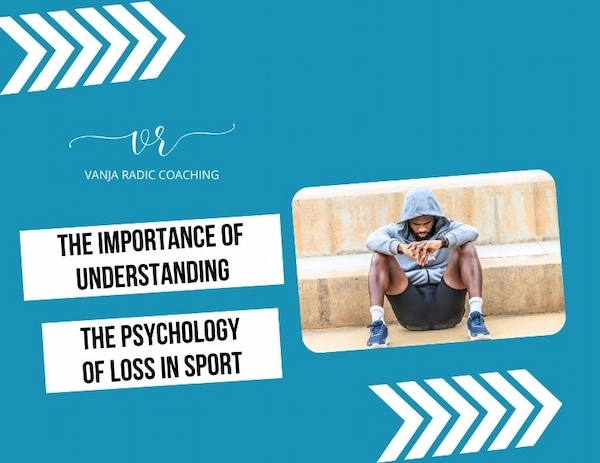
The Psychology of Loss in Sport
Loss is inevitable in sport. Whether it’s a devastating championship defeat, missing Olympic qualification by a fraction of a second, a career-ending injury, or the quiet heartbreak of retirement, every athlete, coach, and fan will face moments when the scoreboard or the season doesn’t turn out as hoped. And yet, in the world of high performance, we rarely explore these experiences through the lens of the psychology of loss or give them the language and space they truly deserve.
Instead, the prevailing culture pushes for quick emotional recovery: “Shake it off. Focus on the next game. Don’t dwell on it.” For athletes and coaches, grief is often treated as an indulgence they can’t afford. For fans, heartbreak after a match is dismissed as overreaction. But when we bypass or suppress these feelings, we miss an opportunity to understand the deep psychological forces at play.
I’ve witnessed this countless times in my coaching career. The hollow look in a goalkeeper’s eyes after letting in the deciding goal. The stunned silence in a locker room after a semifinal loss. The way some athletes carry that weight into the next season, the next team, the next chapter of their lives, without ever having processed what happened. And I’ve also seen what becomes possible when we give loss the attention it deserves: athletes who emerge stronger, teams that grow closer, and individuals who discover something about themselves they never knew before.
When we bypass or suppress those feelings, we’re not being strong. We’re being incomplete. We miss a crucial opportunity to understand the deeper forces at work in our minds and bodies after a loss. We leave grief unacknowledged, where it quietly shapes our confidence, our relationships, and even our performance for months or years to come.
This is where the psychology of loss becomes critical. By understanding what actually happens to us mentally and emotionally after a loss in sport, we can respond with more compassion, build stronger teams, and prevent unresolved grief from undermining performance and wellbeing.
Key Takeaways
- Loss in sport is more than disappointment over a game. It’s a broken attachment to identity, belonging, and purpose that affects athletes, coaches, and fans on a deeply personal level.
- The culture of high performance often cuts grief short, but unprocessed pain remains. Rushing past loss may protect short-term focus, but it risks long-term consequences like burnout, emotional detachment, and fractured trust within teams.
- Understanding the psychology of loss builds stronger, more resilient teams. By naming and integrating the emotional reality of defeat, coaches and athletes can develop authentic resilience rather than suppression disguised as strength.
- Grief education should be included at every level of sport. Training for coaches, rituals for closure, trauma-informed approaches, balanced recovery, and respectful fan engagement all contribute to a healthier sport culture.
- True strength means facing loss, not denying it. The real measure of resilience is the ability to process pain, carry forward its lessons, and remain connected to the game, to teammates, and to oneself
What This Really Means
The psychology of loss is about more than simply acknowledging that something has gone wrong. It’s the study of how human beings experience, process, and adapt when something deeply important is taken from them or comes to an end. It asks: What happens to our minds, our emotions, and even our bodies when the future we imagined suddenly disappears?
In sport, these losses come in many forms. It might be the heartbreak of losing a championship or decisive match after months, or even years, of relentless preparation. It could be falling just short of a lifelong career goal, watching the dream you’ve chased since childhood dissolve in an instant. It could be an injury that doesn’t just bench you for a season but permanently changes your trajectory. It might be stepping away from a long-term coaching role or retiring from the sport that has defined your identity for decades. Or it could be the helpless feeling of standing on the sidelines as your team’s collective dream collapses in a single, brutal moment.
I think about a goalkeeper I worked with years ago who had spent her entire career preparing for one tournament. She’d sacrificed relationships, moved countries, restructured her whole life around this goal. When her team was eliminated in the group stage, she didn’t just lose a competition. She lost the story she’d been telling herself about who she was and what her life meant. That’s not something you “shake off” by the next morning.
The psychology of loss is grounded in bereavement theory and attachment theory. Bereavement theory helps us understand the processes of grieving and mourning, while attachment theory reminds us that humans are wired for connection, to people, to roles, to communities, and to deeply held dreams. When one of those attachments is severed, whether it’s the bond to a teammate, the identity of “elite athlete,” or the pursuit of a championship, our nervous system interprets it as a threat.
That’s why the emotional reaction is often so intense: the body and mind are responding as though something vital has been lost. Because something has. Grief is the lived experience of that loss, the heartbreak, emptiness, or disorientation we feel. The psychology of loss is the framework that helps us make sense of it, giving us the language, context, and tools to navigate the emotional terrain in a way that is both human and healthy.
Grief is the feeling; the psychology of loss is the framework that helps us understand it.
More Than Just a Game
If you’ve ever watched a team moments after the final whistle of a crushing defeat, you know the look. Shoulders slumped. Eyes unfocused, staring into the distance. Faces pale with disbelief. Sometimes tears fall openly; other times, the pain hides behind a blank, frozen expression.
That reaction is not simply disappointment over a game’s outcome. It’s something far deeper. For athletes, the loss can represent months, years, even decades of training, sacrifice, and unwavering commitment. It can feel like watching a part of their very identity slip away. For coaches, it’s the collapse of carefully built strategies, months of leadership, and the shared ambition they’ve carried alongside their team. And for fans, it’s a rupture in a shared sense of belonging, pride, and the ongoing communal story they’ve been investing in, sometimes for a lifetime.
These are not small things. They are all forms of attachment, to a goal, a role, a community, or a dream. And human beings are wired to grieve when meaningful attachments are broken.
I remember sitting with a team after they’d lost a championship match by one goal. The room was silent except for quiet sobs. One player said something I’ll never forget: “I feel like a piece of me died out there.” At the time, some might have thought that was dramatic. But she was expressing something true about the psychology of loss. A part of her identity, the part that was “championship contender,” had been severed. That’s not drama. That’s reality.
The heartbreak, the hollow feeling in the chest, the quiet shock, these are grief responses. But in sport, we rarely call them by their name. Instead, we package them as “tough losses” or “disappointment” and push them aside, missing the chance to truly understand the emotional and psychological impact of what just happened.
Why Grief Gets Cut Short
In elite sport, the message after a loss is either unspoken or said clearly: by tomorrow morning, sometimes even before you leave the locker room, you need to drop it and shift your focus to the next game. There’s rarely time to sit with the pain of what just happened. The season goes on, the schedule is relentless, and the sport culture rewards mental toughness above emotional processing.
For coaches, this urgency often comes from a place of protection. They’re under immense pressure to keep the team’s morale and focus high, and they fear that if athletes are allowed to dwell on grief for too long, it will spiral into something harder to pull out of: low energy in training, loss of belief, or hesitation in competition. Many coaches genuinely believe that the only way to move forward is to “get your head back in the game” as fast as possible.
The common assumptions sound like this: If you dive too deep into grieving, you’ll lose your edge. If you ignore it and push through, you’ll stay sharp and ready.
And in certain contexts, like back-to-back games in a tournament, this approach can protect short-term performance. There simply may not be time to process the loss before the next challenge arrives. But while this might serve the immediate competitive need, it comes with a hidden cost.
Unacknowledged grief doesn’t just disappear. It settles in quietly, becoming an invisible weight that can slow an athlete’s motivation, strain relationships, and undermine the resilience coaches are trying to build. Over time, these stored emotions often resurface as burnout, disconnection from the sport, or a slow, steady erosion of trust within the team.
I’ve seen this pattern repeat itself. A team that never processes a painful loss carries tension into the next season. Players become guarded with each other. The coach wonders why the chemistry has changed. And no one connects the dots back to that moment when grief was pushed aside instead of acknowledged.
Two Paths After Loss
When a team suffers a painful loss, there are usually two roads a coach can take: either encourage everyone to “park” the emotions quickly and move on, or allow space for the grief to be acknowledged before shifting focus. Both approaches come from a place of wanting to protect the team, but they operate on very different timelines and emotional philosophies.
The Traditional Approach: Cutting Grief Short
This is the model most common in elite sport. The reasons are practical and cultural: tournament schedules leave little time to dwell on the past; the culture of high performance still often sees hiding emotions as a sign of strength; and most coaches simply haven’t been trained in grief work at all, so they default to what feels safest, keeping emotions tightly contained.
This approach can be useful in specific, high-pressure situations. It keeps athletes mentally oriented toward the next challenge and minimizes the risk of getting stuck in feelings when fast recovery is extremely important. In back-to-back games or short competition windows, this can help maintain a sense of readiness and momentum.
But the cost is often invisible until much later. Suppressing grief doesn’t remove it. It stores and delays it. Over time, that unprocessed emotional weight can create emotional detachment, weaken team cohesion, and contribute to mental health struggles such as burnout, anxiety, or loss of motivation. What looks like resilience in the moment can sometimes be emotional numbing in disguise.
The Human-Centered Approach: Allowing Grief
This approach starts from the belief that acknowledging loss is not a sign of weakness but an essential part of recovery. It validates the emotional reality of athletes, coaches, and even fans, recognizing that what’s been lost, a dream, a role, a moment, matters deeply.
The benefits are significant. It builds long-term resilience by integrating the loss into the athlete’s story rather than leaving it as an unspoken wound. It strengthens trust within teams by showing that emotions are safe to express and will be met with understanding rather than dismissal. And it reduces emotional interference in future performance because the loss has been processed rather than carried forward like hidden baggage.
The risk? In a time-sensitive competition environment, extended grief processing without structure can create mental overload. If the focus stays too long on the pain, it could affect readiness for the next challenge. That’s why skillful facilitation, guided by a coach, sport psychologist, or other trained professional, is key.
The Middle Path
The most important lesson from the psychology of loss is this: feeling the grief and moving forward are not mutually exclusive. Athletes can be given a safe, time-bound space to name and feel their emotions, then shift into preparation for what’s next. With the right structure, both the heart and the competitive drive can be cared for, building not just better athletes, but stronger and more connected human beings.
A Practical Framework for Processing Loss
The Grieve and Regroup Model, often associated with the Dual Process Model of Grief, recognizes that people naturally move back and forth between facing the reality of a loss and taking steps to rebuild their lives. It views grief as a fluid, shifting process, one where individuals make space for the pain while also finding ways to restore balance, purpose, and momentum.
This framework honors the reality of grief in sport while making sure teams can return to focus when needed. It’s about acknowledging the human experience of loss and maintaining readiness for future performance.
Step 1: Name the Loss
Purpose: Bring the loss into the open so it doesn’t become an unspoken burden.
Time: 15 to 30 minutes
Gather the team or individual athletes in a private space. Use language that normalizes the feelings: “What happened today at the game matters. It’s okay to feel disappointed, heartbroken, or angry.” Invite brief reflections, either verbal or written, on what the loss means to them. Make it clear that all emotions are valid.
I’ve found that simply naming the loss, saying it out loud, releases something in athletes. There’s power in having the coach acknowledge that this hurt. It doesn’t make the pain disappear, but it makes the pain feel witnessed.
Step 2: Feel Without Fixing
Purpose: Allow emotions to be expressed without rushing to solutions or analysis.
Time: 30 to 60 minutes
Encourage athletes to notice where the emotion shows up in their body: tight chest, heavy shoulders, lump in the throat. Give permission for visible emotions like tears, frustration, or quiet. Use grounding techniques such as breathing exercises or body scans to help regulate overwhelming feelings.
Avoid phrases like “It’s just a game” or “We’ll get them next time.” These minimize the experience. The psychology of loss teaches us that grief needs to be felt before it can be integrated. Rushing past this step creates problems down the road.
Step 3: Extract Meaning at the Right Time
Purpose: Start processing the loss as part of the bigger journey without invalidating the grief.
Timing: The next day or a designated time
When emotions have settled, invite discussion about what can be learned or carried forward. Frame reflections in constructive language: “What do we take from this that helps us grow stronger together?” Keep the focus on shared responsibility and team unity, not blame.
This step is crucial but timing matters. If you try to extract meaning too soon, it feels dismissive. If you wait too long, the team may have already moved into unhealthy patterns of avoidance or blame.
Step 4: Set a Regroup Point
Purpose: Establish a clear transition from grieving to preparing.
Agree as a team on when focus will shift to the next objective, for example after the morning meeting or after the recovery session. Use a symbolic action to mark the shift: closing statements, a team huddle, or a shared ritual. Communicate: “We’ve honored what this loss means. Now we carry it forward with us into the next challenge.”
Step 5: Keep the Door Open
Purpose: Provide ongoing support for those who still feel the weight of the loss.
Let athletes know they can talk privately with coaches, psychologists, or trusted teammates in the coming days. Watch for signs of remaining distress, like withdrawal, irritability, or lack of motivation, and address them early. Remind the team that carrying the loss does not mean carrying it alone.
The Weight That Accumulates
A career in sport is not defined by one single loss. It’s built on a series of them. Bereavement theory describes these as finite and nonfinite losses. Finite losses are clear and concrete: a championship that slips away in the final seconds, a career-ending injury, or a retirement announcement that closes one chapter for good. Nonfinite losses are also powerful: a slow decline in your role on the team, the quiet fading of recognition, or the gradual realization that you’re aging out of peak performance.
For athletes and coaches, these experiences rarely happen in isolation. They layer over time, each one leaving its mark. Missing selection for a major event you’ve worked toward for years. Falling short in critical qualification rounds after months of preparation. Injuries that erase an entire season or change your capabilities permanently. Watching the bonds inside a strong team dissolve as players leave or retire. Stepping away from sport altogether and facing the loss of daily identity and structure.
When these losses go unacknowledged, they don’t just disappear. They collect quietly in the background, like microfractures in a bone that’s never given the chance to heal. At first, you can keep performing. But over time, the strain builds. Eventually, it compromises not only your performance but also your wellbeing, your relationships, and your connection to the sport you once loved.
Recognizing the psychology of loss means seeing these moments for what they are, not small setbacks to brush off, but real attachments ruptured over time. When we name them, we create the possibility to heal before the weight becomes too heavy to carry.
Why Fans Grieve Too
For many fans, supporting a team is far more than a weekend hobby. It’s part of who they are. Their connection to the team is emotional, not just recreational. Over years, even decades, they form bonds with players and teams, create rituals and traditions around game days, and bring the team’s journey into the story of their own lives. Watching a match becomes a shared experience with family, friends, and entire communities. The highs of victory and the lows of defeat are felt collectively.
When their team loses, especially in a very important match, the hit can feel deeply personal. It’s not only about the score. It’s about the disruption of something they’ve invested in emotionally and socially. The psychology of loss helps explain why this hurts so much: our attachment to a team fulfills two powerful human needs, the need to belong and the need for identity. A loss shakes that foundation, threatening the sense of connection and pride fans have built over time.
Without educational content about grief in sport, many fans don’t recognize this feeling as grief. Instead, they might experience a flood of frustration, emptiness, or even shame, emotions that can be very uncomfortable to sit with. To avoid facing that pain directly, it’s common for some to redirect it outward. That’s when we see blame placed on players, referees, or coaches, and sometimes even aggression or hostility toward opposing fans. These reactions, while harmful, often mask the underlying truth: a loss has fractured an important attachment, and the grief is real.
Supporting Fans Through Loss
While fans aren’t on the field, their emotional investment is real, and it deserves thoughtful support. Sports organizations and communities can play an important role in helping fans process grief in healthy ways, preventing it from spilling into blame or bitterness.
There are several ways to help. Acknowledging the loss publicly through post-match statements or interviews that validate fans’ feelings goes a long way. Simple phrases like “We know this one hurts” show empathy. Sharing behind-the-scenes perspectives and giving fans insight into how the team is processing the loss creates a sense of shared humanity and connection. Fostering positive rituals, like fan gatherings, chants, or symbolic acts after tough losses, focuses on unity rather than division. Promoting respectful dialogue by using team platforms to model sportsmanship, even in defeat, and inviting fans to share memories, highlights, and appreciation strengthens community. Providing resources by partnering with community programs or mental health organizations to share tips on managing strong emotions around sport offers practical support.
By applying the principles of the psychology of loss to fan culture, clubs and communities can transform post-defeat moments from sources of division into opportunities for deeper connection and loyalty.
Building Grief Education into Sport
If we want a sport culture that is not only high-performing but also humane and sustainable, we need to make education about grief and loss part of the foundation. Loss is already built into sport. The question is whether we respond to it in ways that strengthen or weaken the people involved. Integrating grief literacy means giving athletes, coaches, and fans the skills and language to recognize grief, understand it, and respond in ways that heal rather than harm.
Training and Education
Grief and loss are not often discussed openly in performance contexts, but they affect motivation, confidence, and team cohesion. Offering workshops for coaches, athletes, and sport leaders can help them identify grief when it appears, whether it’s after a final whistle, a season-ending injury, or the quiet fading of a role. These sessions can teach practical strategies for responding with compassion while still maintaining performance focus.
We can also take a step further by integrating the psychology of loss into sport psychology programs, making sure that future professionals are equipped to address this reality from the start.
Rituals for Closure
Sport moves fast, but without moments of acknowledgment, losses can remain emotionally “unfinished.” Simple, symbolic acts at the end of a season or after a major loss help teams and individuals close one chapter before starting another. This might be a team circle where players share one thing they’re proud of, a reflection session that names both the highs and the lows, or a “farewell” ritual for retiring athletes or departing staff. Rituals don’t delete grief, but they create a sense of collective witness and shared meaning.
Trauma-Informed Coaching
Some athletes carry complex histories: past sport injuries, repeated near-misses, or even personal traumas from private life unrelated to sport. These experiences can make losses in sport hit harder. A trauma-informed coach understands that loss may activate deeper layers of pain. Responding with empathy, emotional regulation, and flexibility, not just tactical adjustments, helps athletes feel safe and supported, even in the most competitive environments.
Balanced Recovery
In high performance, the focus is often on physical recovery: ice baths, nutrition, rest. But mental recovery is just as important. Allowing short, intentional space for emotional processing before shifting focus to the next target can help athletes integrate the loss and prevent it from hanging on in destructive ways. This could be as simple as a structured debrief, guided breathing, or journaling before diving back into training plans.
Respectful Fan Engagement
Fans are part of the emotional ecosystem of sport. When their team loses, they feel it, sometimes deeply. Open communication about the emotional impact of losses can make fans feel seen and connected, even in disappointment. Sports organizations can model respectful fan behavior after a defeat by highlighting acts of sportsmanship, encouraging appreciation for the season, and reinforcing the values of respect and unity over hostility or blame.
By including education about grief and loss at every level, we create a sport culture that’s not only about winning, but about caring for the people who give the game their heart.
When Loss Goes Unaddressed
In sport, the temptation to “just move on” after a painful loss is strong. The schedule is packed, the pressure is constant, and the culture often celebrates those who can bury their feelings and keep pushing forward. But when grief is ignored or rushed away, it doesn’t simply disappear. It stays, waiting for an outlet.
Over time, the emotional strain builds quietly in the background. It can surface in unexpected ways: tense exchanges between teammates, a sudden drop in motivation, or a player who seems to “check out” emotionally during important moments. Athletes who carry unprocessed losses from season to season may find themselves battling burnout, losing their passion for the game, or stepping away from sport altogether, not because they’ve lost ability, but because the emotional cost has become too high.
For coaches, repeated exposure to unresolved grief can lead to emotional detachment. They may still run effective drills and deliver strategic guidance, but the relational connection with their team fades. This distance, while protective in the short term, destroys trust and makes it harder to inspire players through the inevitable highs and lows of competition.
Fans, too, are affected. When their own feelings of loss aren’t recognized, some may turn to blame, hostility, or disengagement. Passion for the game risks being replaced by cynicism or aggression, creating a ripple effect that impacts the wider sporting community.
The psychology of loss makes one thing clear: pain that isn’t processed will find its way into the future. Whether it appears as conflict, withdrawal, or a slow fracture of connection, unacknowledged grief undermines the very resilience sport aims to build. Addressing loss isn’t about dwelling. It’s about ensuring that individuals and teams can carry forward their experiences in a way that strengthens, rather than weakens, their relationship with the game.
Redefining What Strength Really Means
In sport, we often celebrate the competitor who can take a tough hit, physically or emotionally, and keep going without showing that it hurts. But true strength isn’t about pretending the pain isn’t there. It’s about having the courage, awareness, and skill to face it directly, to acknowledge what has been lost, and to carry it forward in a way that builds rather than breaks.
This is where the real value of understanding the psychology of loss becomes clear. By naming the emotional reality of defeat, whether it’s a missed medal, a heartbreaking season end, or the close of a career, we make space for athletes, coaches, and fans to process what has happened. We move away from the illusion that resilience means “bouncing back instantly” and toward a deeper, more authentic resilience, one that comes from integrating the experience, not ignoring it.
Loss will always be part of sport. There will always be a final whistle that doesn’t go our way, an injury that changes the trajectory, or a dream that doesn’t unfold as planned. But when we stop suppressing these moments and start understanding them, we transform how we carry our stories. We strengthen not just performance, but connection, within teams, between coaches and players, and among the communities who live and breathe the game.
In the end, sport isn’t only about the trophies in the case or the numbers on the scoreboard. It’s about the people who show up, give their all, and find meaning in both victory and heartbreak. When we embrace that truth, we make sport a place where being strong and being human can stand side by side.
Stay in Touch
Do you have any coaching challenges you’d like me to address? Let me know what topics you struggle with most in goalkeeper coaching by filling out this form.
Never miss an update
Subscribe to my newsletter to receive updates about my online and in-person projects, research papers, creative projects (blog posts, books, e-books), and new online programs.
My Online Video Courses:
– Level 1 Video Course for Coaches
– Level 2 Video Course for Coaches
– Sliding Technique Video Course
– Agility Ladder Drills Video Collection – 102 drills
Subject to Copyright
Unauthorized use and/or duplication of any content from this website without express written permission from this site’s owner is strictly prohibited. All content (including text, data, graphics files, images, illustrations, videos, and sound files) contained in www.vanjaradic.fi is copyrighted unless otherwise noted and is the property of Vanja Radic Coaching. If you wish to cite or use any content from my website, please contact me first to obtain permission.
No responses yet