
When the European Handball Federation invited me to present at their first webinar on modern goalkeeper training, I felt a mix of honor and responsibility. Honor because the EHF platform reaches coaches across the entire continent and beyond. Responsibility because I knew this was an opportunity to share ideas that I believe can fundamentally change how we approach goalkeeper development.
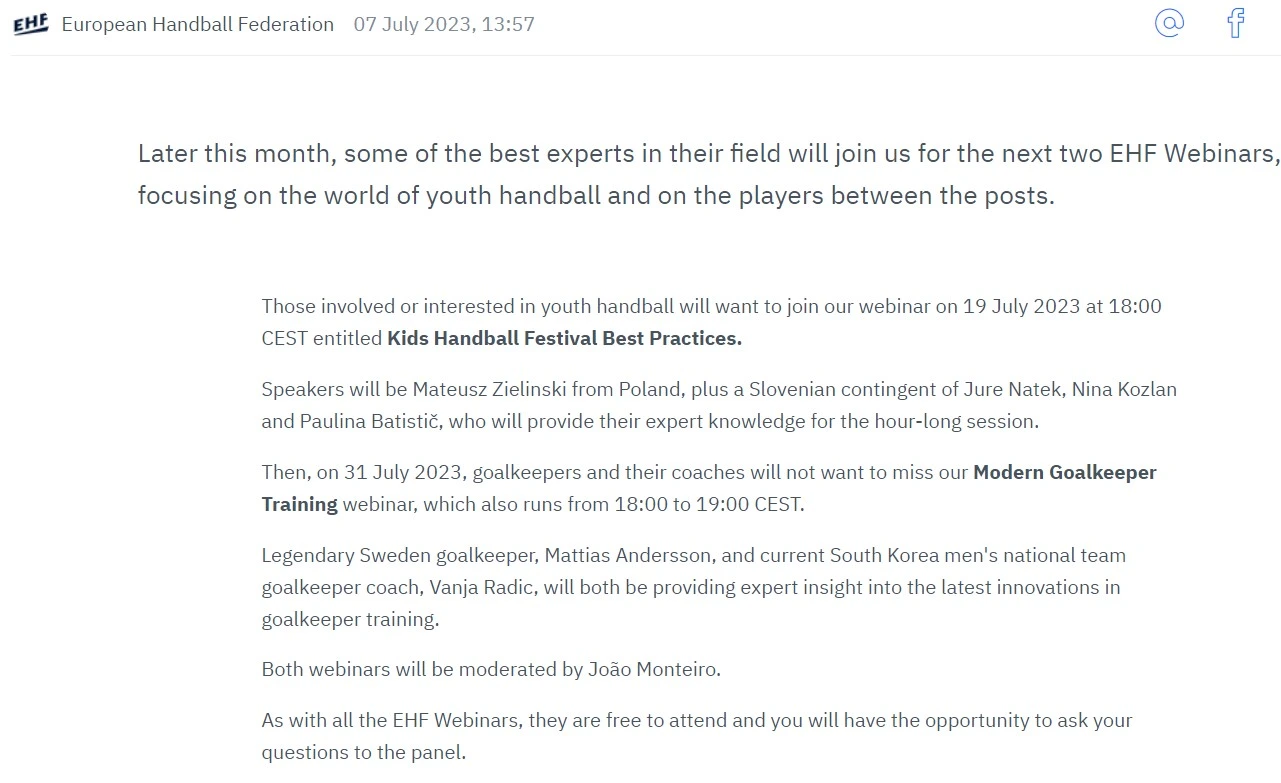
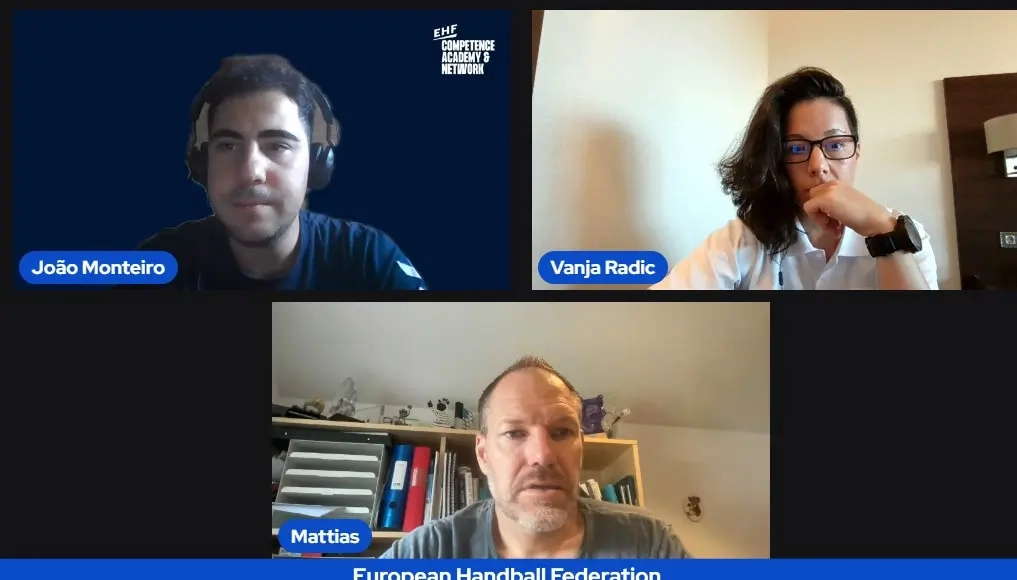
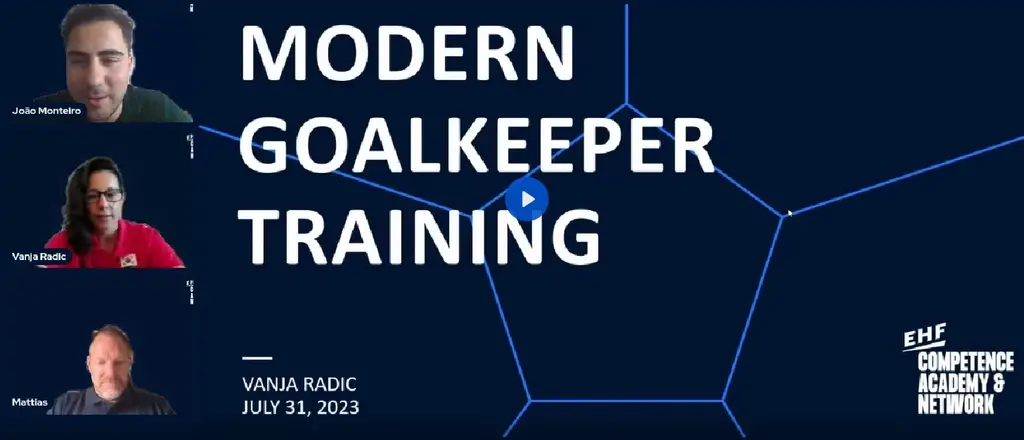
The webinar, held on July 31st, 2023, brought together 1,250 registered participants, a record for EHF webinars at that time. I had the privilege of sharing the presentation alongside Mattias Andersson, and each of us brought our perspectives on what modern goalkeeper training should include.
The feedback afterwards was overwhelming and deeply gratifying. Coaches reached out with questions, insights, and stories of how they planned to implement new ideas. This response confirmed what I already believed: there’s a hunger in the handball community for deeper understanding of goalkeeper development, and many coaches are ready to explore approaches that go beyond traditional methods.
Key Takeaways
- Modern goalkeeper training adds new layers to traditional methods. It doesn’t replace what works but addresses aspects of performance that conventional training doesn’t fully develop, particularly cognitive and neurological capabilities.
- Understanding how the brain processes information transforms training design. Goalkeeping is fundamentally a neurological challenge. Training that accounts for how the brain works produces different and often better results than training that ignores this dimension.
- The visual system deserves far more attention than most coaches give it. Vision isn’t just about “watching the ball.” The capabilities of the eyes and visual processing centers can be specifically trained, with significant implications for goalkeeper performance.
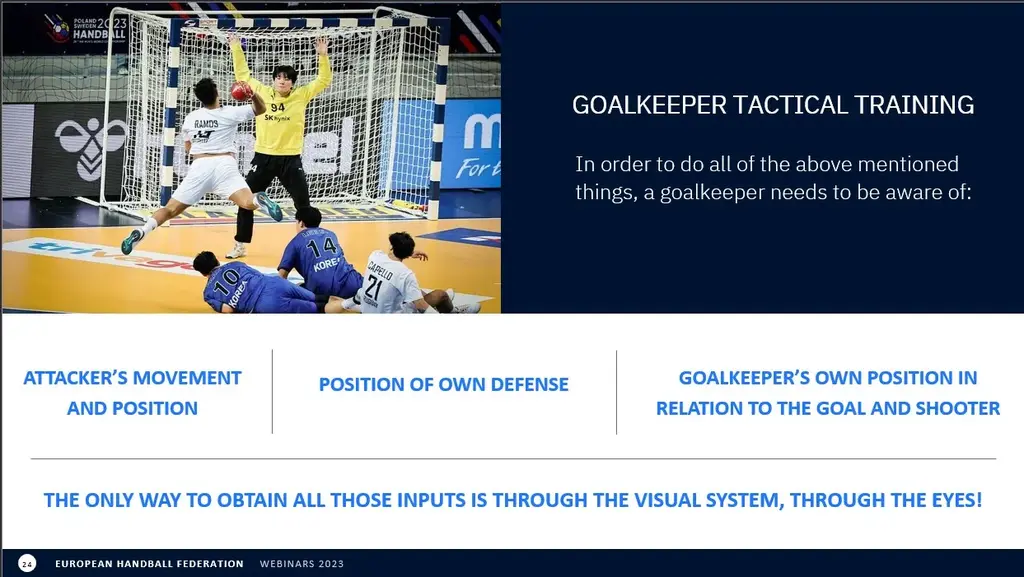
- Tactical understanding involves processing multiple information streams simultaneously. Goalkeepers must integrate attacker movement, defensive positioning, and their own position in real time. Training should develop this integrative processing, not just isolated skills.
- The handball community benefits when experts share openly. Collaborative events like the EHF webinar advance the entire field. No single coach has all the answers, and collective knowledge moves everyone forward.
Why “Modern” Matters
Before I dive into what the webinar covered, let me explain why I care so much about the word “modern” in the context of goalkeeper coaching.
Handball has evolved dramatically over the past decades. The speed of play has increased. Shooting techniques have become more sophisticated. Tactical systems have grown more complex. Goalkeepers today face challenges that their predecessors didn’t encounter, and they need preparation that matches these elevated demands.
But here’s what troubles me a bit: while the game has evolved, much of goalkeeper training has remained relatively static. Many coaches still rely primarily on the same drills and technical exercises that were used 15 – 20 or 30 years ago. This isn’t because those methods are bad. It’s because many coaches haven’t been exposed to newer approaches that complement and deepen traditional training.
Modern goalkeeper training doesn’t mean abandoning what works. It means adding layers of understanding and methodology that address aspects of performance that traditional training doesn’t fully reach. It means asking questions that weren’t being asked before and finding practical ways to answer them.
The Questions That Drive My Approach
Let me share some of the questions that shaped what I presented at the webinar. These are questions I’ve been exploring for years, and they’ve led me into areas of study that aren’t typically associated with handball coaching.
What actually happens in a goalkeeper’s brain during a save? Not philosophically, but neurologically. What systems are activated? What information is being processed? How does this processing happen so quickly that a goalkeeper can react to shots traveling at extreme speeds?
Modern goalkeeper training, as I see it, must engage with these questions. Because if we understand how the brain processes information during goalkeeping, we can design training that specifically develops those processing capabilities.
Another question: why do some goalkeepers “read” the game better than others? What are they actually seeing that less effective goalkeepers miss? And more importantly, can this ability be trained, or is it simply a talent that some possess and others don’t?
I believe it can be trained. But training it requires understanding what’s actually happening when a goalkeeper successfully anticipates where a shot will go. The answers involve the visual system, pattern recognition, and the integration of multiple information sources in real time.
What I Can Tell You (And What I Won’t)
I want to be transparent about something. The webinar contained specific methodologies and training approaches that I’ve developed through years of study, practice, and refinement. I’m not going to reveal all of that content in a blog post, and I hope you understand why.
What I will do is give you a sense of the territory we explored, enough to understand why modern goalkeeper training matters and to spark your curiosity about going deeper.
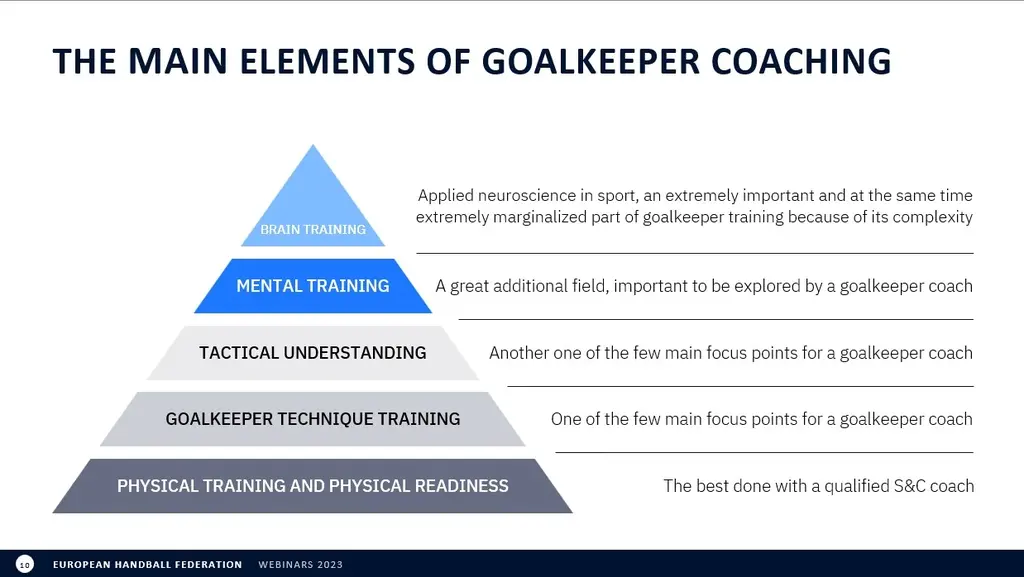
The presentation covered three interconnected areas: tactical understanding and its foundations, the neuroscience of goalkeeper performance, and specific training approaches that develop capabilities most traditional training doesn’t address.
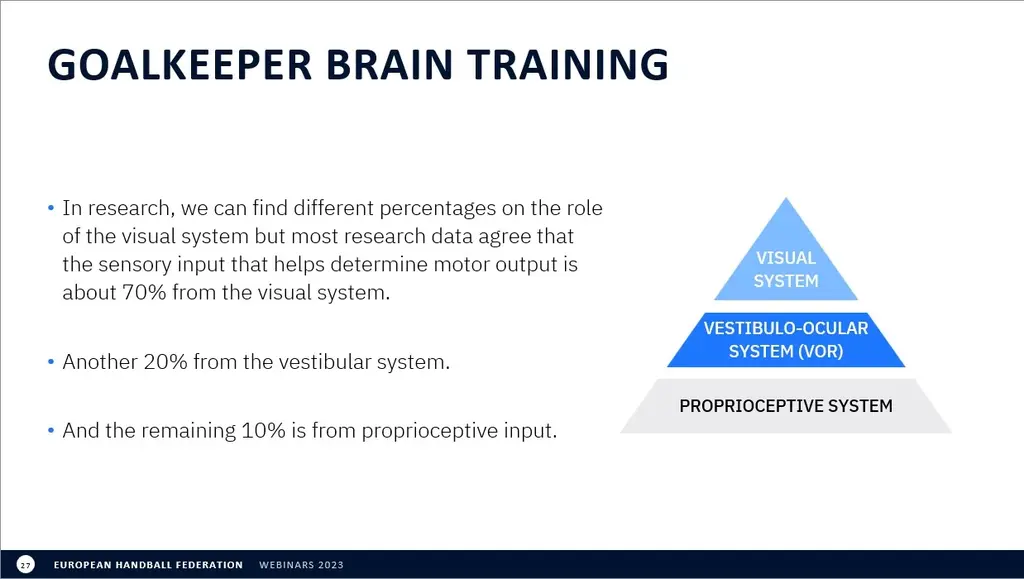
Within the neuroscience section, I explored how the brain receives and processes information relevant to goalkeeping. The research in this area is fascinating, and it has direct implications for how we should structure training. Let me give you just a hint: the visual system plays a much larger role than most coaches realize, and I’m not just talking about “watching the ball.”
Modern goalkeeper training that incorporates understanding of the visual system looks different from training that ignores it. The exercises change. The coaching cues change. The progression of difficulty changes. And most importantly, the outcomes change.
The Success of Goalkeepers Depends on Something Often Overlooked
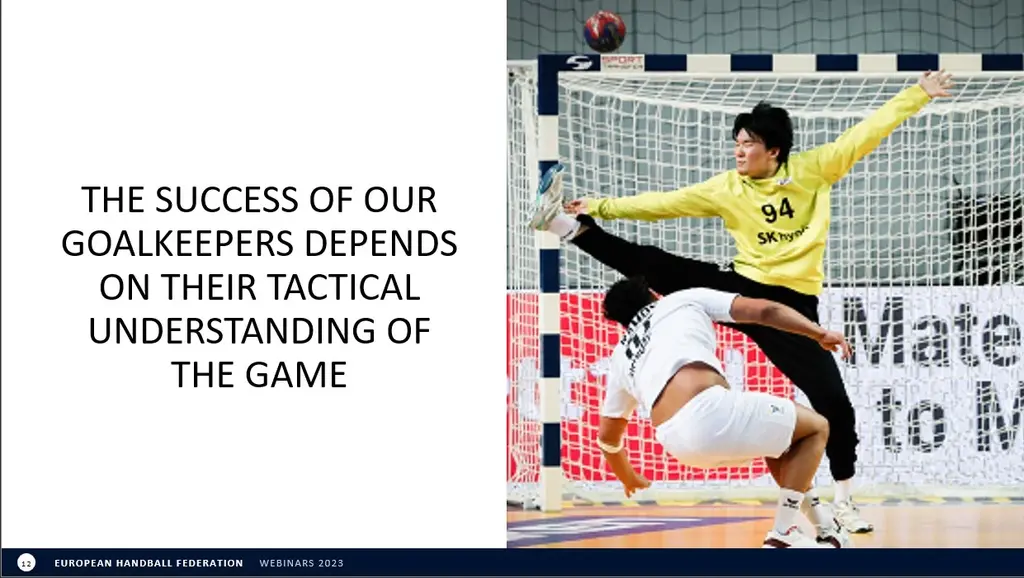
One of the key ideas I presented was this: the success of our goalkeepers depends heavily on their tactical understanding of the game. This might sound obvious, but let me push deeper.
Tactical understanding for goalkeepers isn’t just about knowing team defensive systems or understanding offensive patterns. It’s about processing multiple streams of information simultaneously and making decisions based on that integrated picture.
A goalkeeper must track the attacker’s movement and position. They must be aware of where their own defenders are and how the defensive formation is shifting. They must continuously adjust their own position in relation to both the goal and the potential shooter. All of this happens while the play is developing at high speed.
Modern goalkeeper training must develop the ability to process all of these inputs efficiently. This is where the brain training aspects of my work become relevant. The question isn’t just “what should a goalkeeper see?” but “how do we train the systems that process what they see?”
I touched on this at the webinar, explaining how different sensory systems contribute to motor output in goalkeepers. The visual system dominates, but it’s not alone. There are other systems involved that most coaches have never considered training directly.
Why Applied Neuroscience Belongs in Goalkeeper Coaching
I know that “neuroscience” can sound intimidating or overly academic. But applied neuroscience simply means using scientific understanding of the brain and nervous system to inform practical training decisions.
Modern goalkeeper training benefits from applied neuroscience because goalkeeping is fundamentally a neurological challenge. The physical demands are real, of course. Goalkeepers need strength, flexibility, explosiveness, and endurance. But the limiting factor for most goalkeepers isn’t physical. It’s the speed and accuracy of information processing.
When a shooter releases the ball, the goalkeeper has a fraction of a second to identify the shot’s trajectory, initiate the appropriate movement, and execute the save. This entire sequence happens faster than conscious thought. It’s driven by neural systems that can be specifically developed through targeted training.
At the webinar, I introduced frameworks for thinking about these neural systems and practical approaches for training them. I can’t share all the details here, but I want you to understand that this isn’t theoretical speculation. It’s a practical methodology with concrete exercises and progressions.
The Visual System: More Important Than You Think
Let me give you one more hint about the content I shared, because this particular topic deserves attention.
Modern goalkeeper training should include specific work on the visual system. Not just “tracking the ball” exercises, but training that develops the underlying capabilities of the eyes and the visual processing centers of the brain.
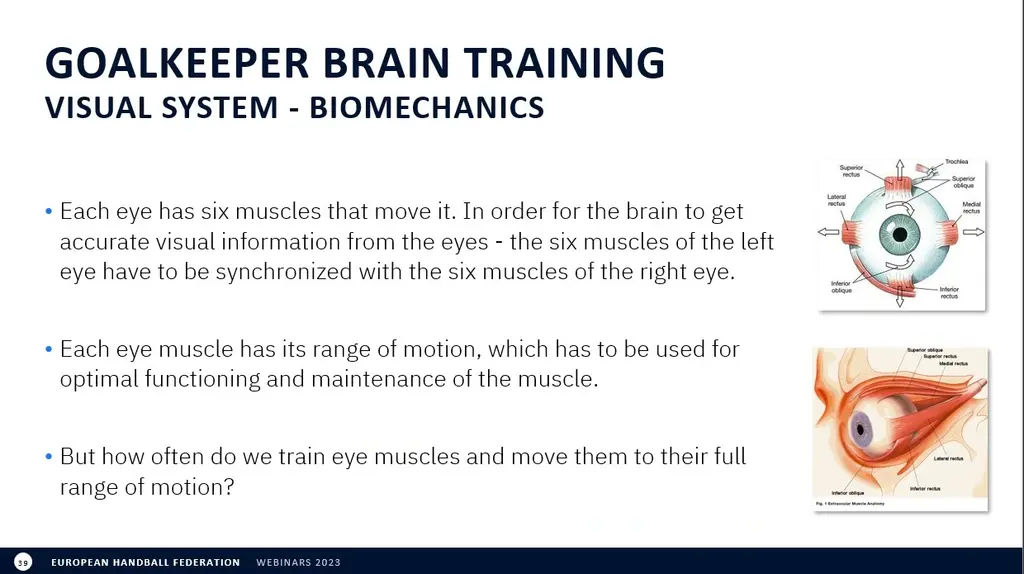
Did you know that the eyes are controlled by muscles, just like any other part of the body? And like any muscles, these can be trained to function more effectively. Did you know that the coordination between the two eyes affects the quality of visual information the brain receives? And that this coordination can be developed?
Most coaches have never thought about training eye muscles or developing visual processing capabilities. But when you understand how central the visual system is to goalkeeper performance, it becomes obvious that this is an area worth exploring.
I went into detail about this at the webinar, including specific biomechanical considerations and training approaches. The response from coaches was remarkable. Many said they had never considered this aspect of goalkeeper development before, and they were eager to learn more.
Sharing with Mattias Andersson
One of the highlights of this project was collaborating with Mattias Andersson. Sharing the webinar platform with someone of his caliber and experience was both humbling and energizing.
Mattias brought his own perspectives and insights on modern goalkeeper training, and hearing how his thinking complemented and contrasted with mine was valuable for everyone involved, including me. This kind of exchange is exactly what the handball community needs more of.
Modern goalkeeper training will advance faster when experts share openly, debate respectfully, and learn from each other. No single coach has all the answers. The collective knowledge of the community is what moves the entire field forward.
I’m grateful to Mattias for his contributions and for the collaborative spirit he brought to the project.
Gratitude to the EHF
I also want to express deep appreciation to the people at the European Handball Federation who organized this webinar. They recognized that goalkeeper training deserves dedicated attention and created a platform for that attention to happen.
The EHF has continued this commitment with subsequent initiatives, including a goalkeeper seminar in Vienna. This kind of institutional support matters because it signals to the entire handball world that goalkeeper development is a priority, not an afterthought.
We need more educational and inspirational materials about goalkeeper training and coaching in the handball world. The EHF is helping to meet this need, and I’m honored to contribute to their efforts.
Modern goalkeeper training will only spread if there are platforms and communities that support coaches in learning new approaches. The EHF is building those platforms, and I hope this continues to grow.
What You Can Do Next
If you watched the webinar and have questions, I encourage you to reach out. I respond to as many coaches as I can, and I genuinely enjoy helping others explore these ideas.
If you didn’t see the webinar but this post has sparked your curiosity about modern goalkeeper training, I encourage you to pursue that curiosity. Read research on the neuroscience of sports performance. Explore how visual training is used in other sports. Ask questions about what actually happens in the brain during high-speed athletic performance.
The more coaches who engage with these questions, the faster our collective understanding will grow. And the more goalkeepers will benefit from training that develops them completely, not just physically, but neurologically and cognitively as well.
Why I Do This Work
Let me close with something personal. I’m deeply passionate about this work. Modern goalkeeper training isn’t just a professional interest for me. It’s a calling that I feel at a deep level.
When I discover something that can help goalkeepers or goalkeeper coaches develop more effectively, I want to share it. When I see coaches implementing these ideas and reporting positive results, I feel genuine joy. When I connect with others who share this passion for pushing goalkeeper development forward, I feel part of something larger than myself.
The EHF webinar was one expression of this passion. But it’s part of a much larger journey that I’ve been on for years and that I expect to continue for the rest of my career.
We can all always learn from each other, and we should never stop learning and improving our coaching skills. This is a principle I try to live by every day.
I’m grateful for the opportunity to share my passion, experience, and knowledge through platforms like the EHF. And I’m grateful to everyone who engages with this work, asks questions, offers feedback, and pushes all of us to keep growing.
Modern goalkeeper training is an evolving field, and the best is yet to come.
Stay in Touch
Do you have any coaching challenges you’d like me to address? Let me know what topics you struggle with most in goalkeeper coaching by filling out this form.
Never miss an update
Subscribe to my newsletter to receive updates about my online and in-person projects, research papers, creative projects (blog posts, books, e-books), and new online programs.
My Online Video Courses:
– Level 1 Video Course for Coaches
– Level 2 Video Course for Coaches
– Sliding Technique Video Course
– Agility Ladder Drills Video Collection – 102 drills
Subject to Copyright
Unauthorized use and/or duplication of any content from this website without express written permission from this site’s owner is strictly prohibited. All content (including text, data, graphics files, images, illustrations, videos, and sound files) contained in www.vanjaradic.fi is copyrighted unless otherwise noted and is the property of Vanja Radic Coaching. If you wish to cite or use any content from my website, please contact me first to obtain permission.
No responses yet