
Coaching at the World Championship
A month after the end of the 28th IHF Men’s World Championship in Poland and Sweden, I found myself still processing everything that happened. Coaching at the World Championship was something I had imagined for years, but the reality of living through it was far more profound than any expectation I had carried. As the goalkeeper coach for the senior men’s national team of the Republic of Korea, I experienced growth that will shape my coaching for the rest of my career.
This wasn’t just a tournament. It was a masterclass in everything that matters in high-level sport: preparation, pressure, adaptation, teamwork, resilience, and the kind of learning that only comes when you’re pushed beyond what you thought you were capable of handling.
I want to share what I learned, not just as a record of what happened, but as something that might help other coaches who dream of competing at the highest levels. Because if there’s one thing I know for certain now, it’s that coaching at the World Championship will change you. The question is whether you’re ready to be changed.
Key Takeaways
- Major tournament coaching is a team effort. You can’t succeed alone at this level. The quality of relationships with your coaching partners, the support from your federation, and the trust between you and your athletes all determine whether you’ll perform well under pressure.
- Mental and emotional stamina matters as much as technical knowledge. World Championship intensity is sustained over weeks, not days. Learning to pace yourself, recover between matches, and maintain focus across the entire tournament is essential and can only be developed through experience.
- Your athletes absorb your emotional state. At the highest level, players watch their coaches closely. Composure, steady confidence, and calm under pressure are contagious. So is panic. Model what you want your athletes to feel.
- Pressure reveals growth edges. The intensity of major competition shows you exactly where you need to develop further. Pay attention to these lessons. They’re more valuable than any coaching course could provide.
- Every achievement builds on relationships. The people who believed in you, challenged you, and supported your development over years are part of every success. Honor those relationships and remember that coaching at the highest level is never truly an individual accomplishment.
The Weight of the Moment
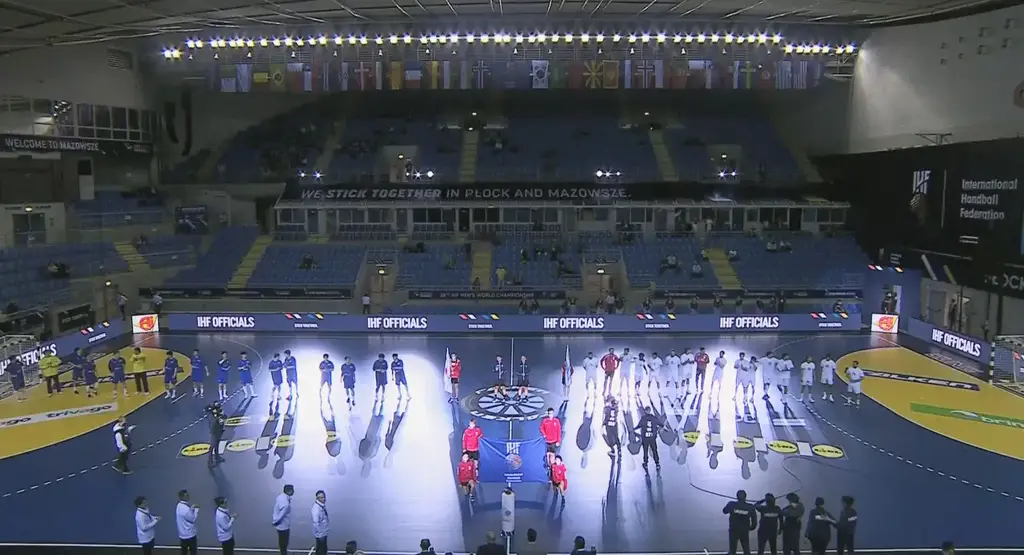
Let me describe what it actually feels like to walk into an arena for your first World Championship match. There’s a specific kind of nervousness that comes from knowing you’ve prepared everything you can prepare, and now it’s time to see if it was enough.
The months of training, the video analysis sessions, the conversations with goalkeepers about positioning and timing and mental focus, all of it compresses into a single moment when the whistle blows. You’re no longer preparing. You’re doing. And millions of people around the world are watching.
Coaching at the World Championship carries a weight that I didn’t fully understand until I experienced it. Every decision feels magnified. Every timeout conversation matters more. Every interaction with your athletes has consequences that ripple outward in ways you can sense but can’t fully track.
I remember looking at our goalkeepers during warm-ups before our first match and feeling an overwhelming sense of responsibility. These athletes had trusted me with their development. The Korean Handball Federation had trusted me with this role. My coaching colleagues had trusted me to do my part within our system.
That trust was both terrifying and energizing. It pushed me to be more present, more focused, more intentional than I had ever been before.
Learning from Elite Coaching Partners
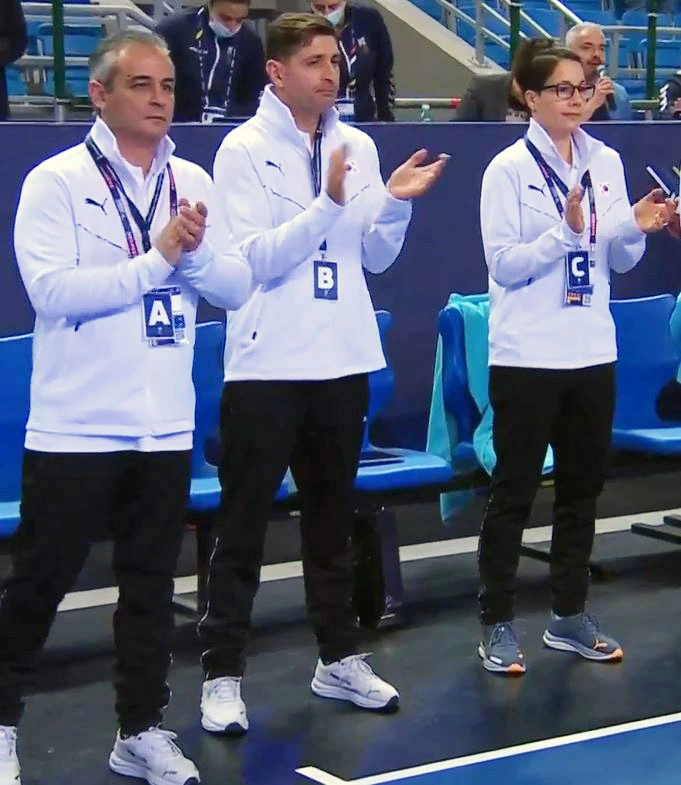
I couldn’t have asked for better coaching partners at this time to experience this journey with than Rolando Freitas and Herlander Silva. Working alongside coaches of their caliber was itself an education that no course or certification could provide.
When you’re coaching at the World Championship, you need people around you who have been there before. You need people who understand the rhythm of major tournaments, the way energy rises and falls across multiple matches, the specific pressures that come from competing against the world’s best teams.
Rolando and Herlander brought decades of high-level experience to our work. Watching how they managed pressure, how they communicated with players during intense moments, how they made decisions when everything was moving fast, this taught me things I couldn’t have learned any other way.
One of the most valuable lessons I absorbed from them was about composure. At the highest level, your athletes are watching you as much as you’re watching them. If you project panic, they feel it. If you project steady confidence, they absorb that too. The coaches around me modeled this composure in ways that I’ve tried to internalize for my own practice.
Coaching at the World Championship is a team effort in the truest sense. The goalkeeper coach can’t succeed independently of the head coach’s system. The tactical plans can’t work without the fitness preparation. Everything connects, and the quality of those connections determines whether the staff functions as a unit or a collection of individuals.
The Korean Team and What They Taught Me
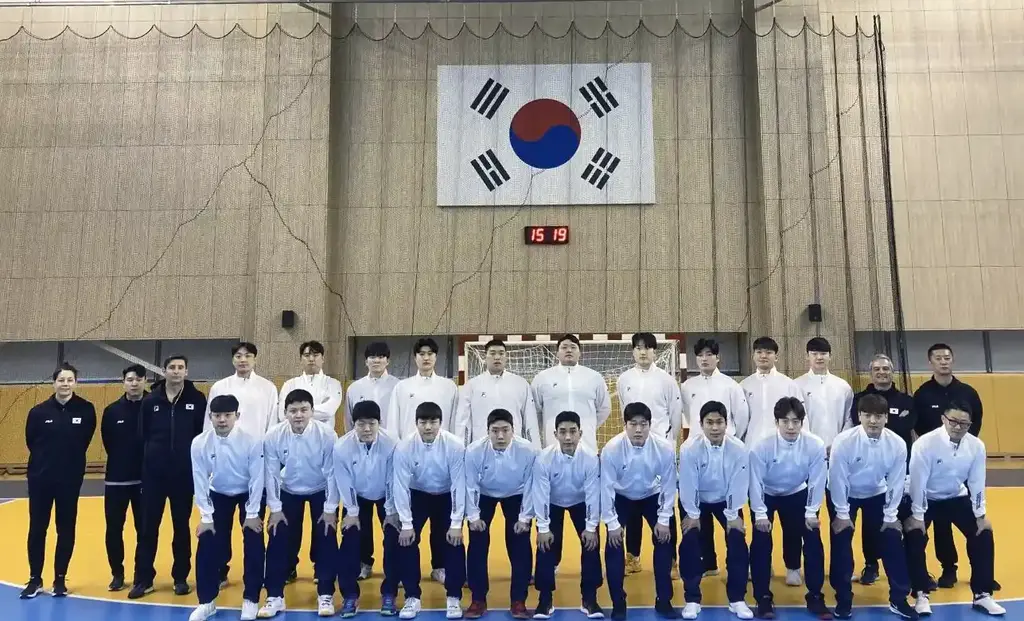
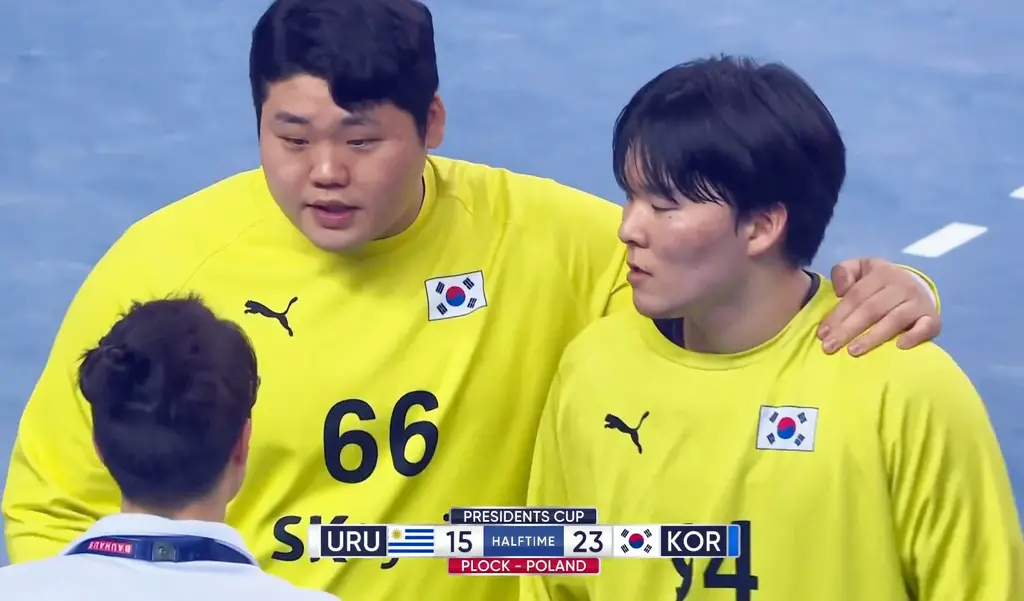
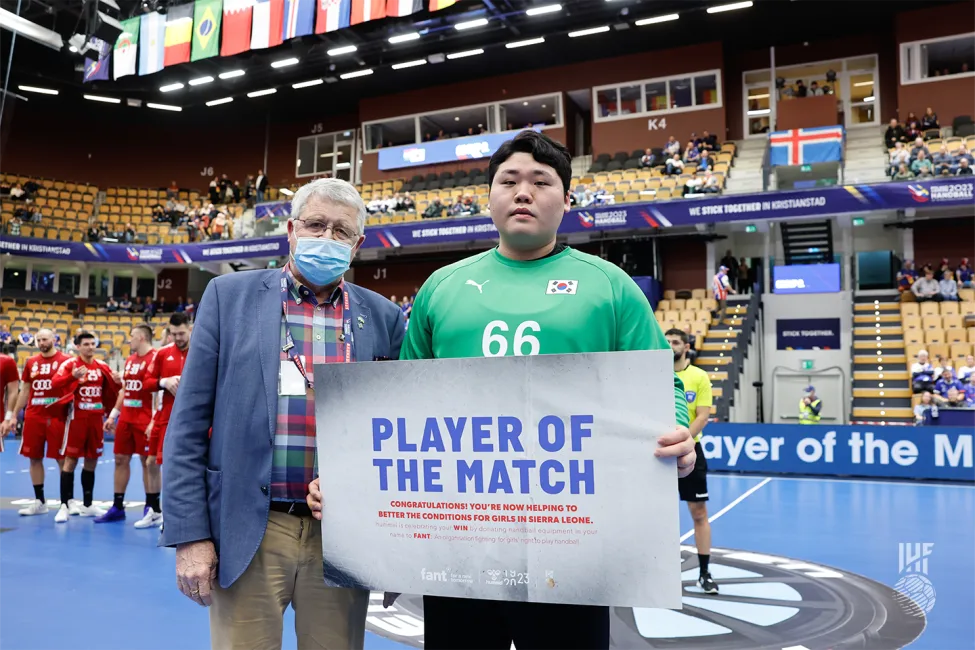
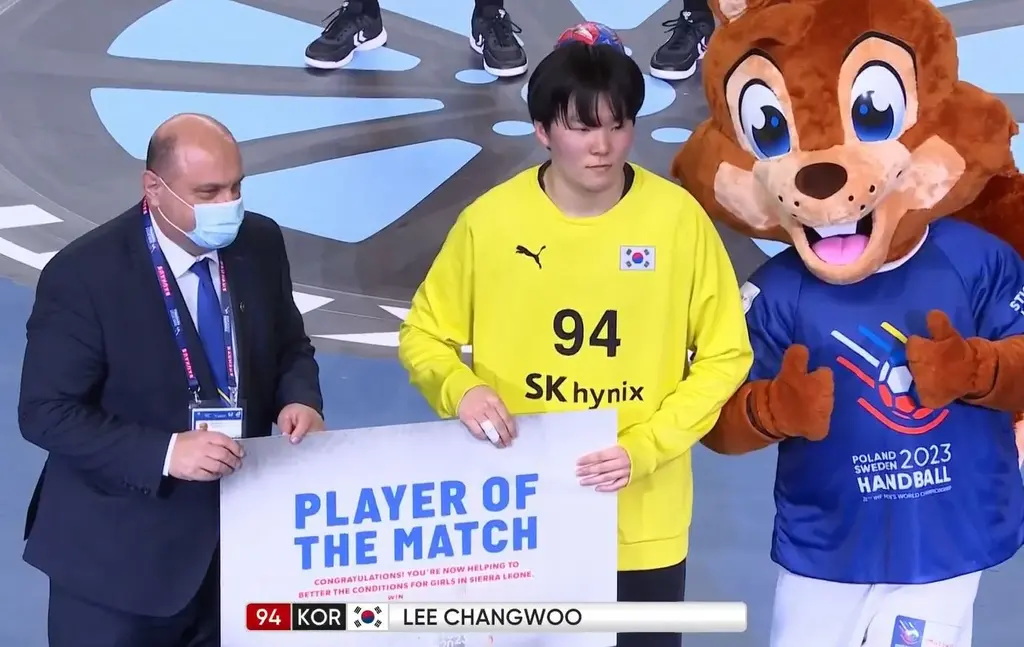
Working with the Republic of Korea men’s national team gave me insights into athletic dedication that I will carry forever. The discipline, the work ethic, the willingness to commit fully to collective goals, these qualities showed up every single day throughout our preparation and competition.
Korean handball culture emphasizes respect, hard work, and team unity in ways that profoundly influenced how I think about building training environments. When an athlete trusts the process completely and gives everything they have to the group’s success, the possibilities expand dramatically.
Our goalkeepers embodied this commitment. They arrived at every session ready to work. They implemented feedback without defensiveness. They supported each other through difficult moments in competition. This made my job easier in some ways and more meaningful in others.
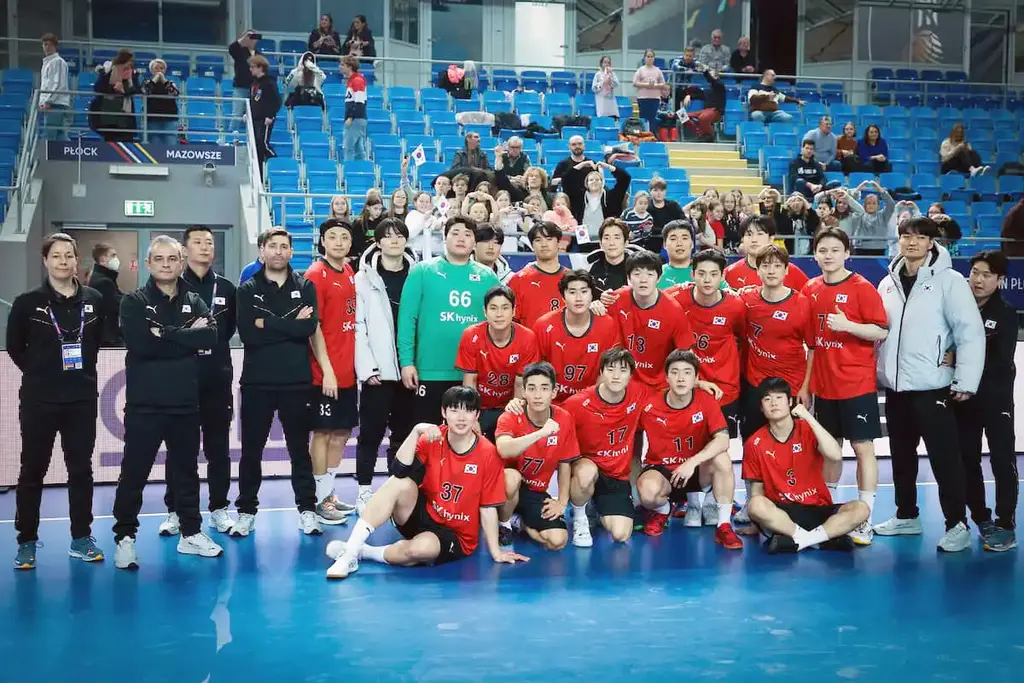
Coaching at the World Championship with athletes like these reminded me why I fell in love with this profession in the first place. It’s not about the glory of big tournaments, though those moments are wonderful. It’s about being part of something larger than yourself, contributing to other people’s growth and achievement, watching human beings push toward their potential.
The Korean Handball Federation supported us unconditionally throughout this journey. Behind every successful tournament appearance is an infrastructure of people working in offices, handling logistics, managing relationships, solving problems that athletes and coaches never see. I’m grateful for everyone who made it possible for us to focus on our work.
The Intensity of Competition
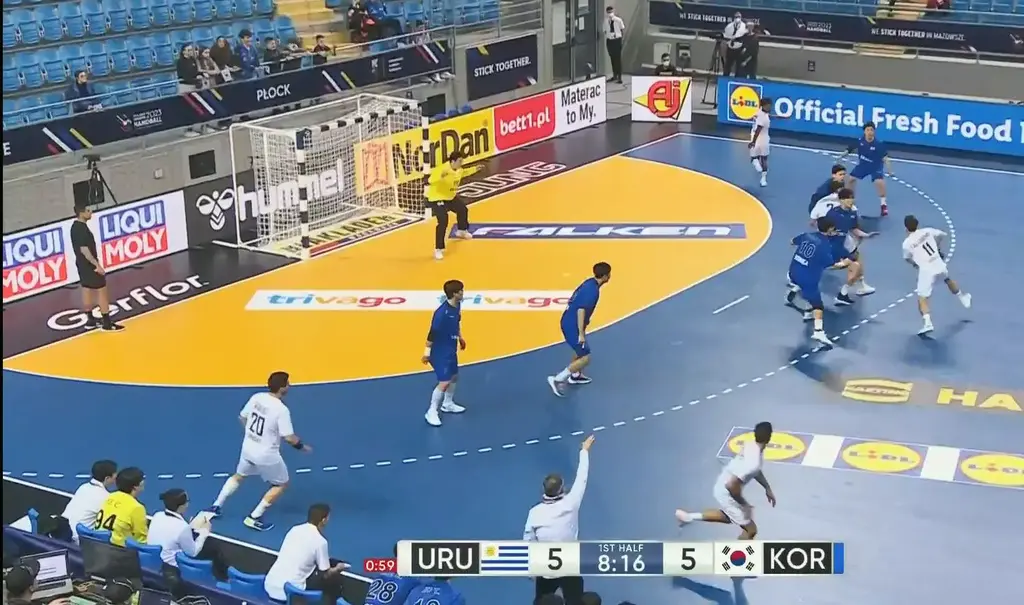
Nothing in my previous experience fully prepared me for the intensity of World Championship competition. The level of play, the quality of opponents, the speed at which everything happens, it was all elevated beyond what I had encountered before.
Every team at this level has strengths. Every team has prepared thoroughly. Every team believes they can win. This means there are no easy matches, no moments where you can relax your concentration, no opponents you can underestimate.
Coaching at the World Championship requires managing this intensity across multiple matches over weeks of competition. You can’t peak emotionally for the first game and then crash. You have to find ways to sustain focus, recover between matches, and maintain the quality of your work day after day.
This was one of the biggest learning edges for me. The mental and emotional stamina required for a major tournament is different from what I had developed through club and national team work at other levels. I had to learn to pace myself, to recognize when I needed rest, to be strategic about where I invested my energy.
The travel and relocations added another layer of challenge. Different cities, different arenas, different time schedules. Adapting to all of this while maintaining preparation quality requires flexibility that you can only develop through experience.
Specific Lessons for Goalkeepers
As a goalkeeper coach, I took away specific insights about preparing athletes for the highest level of competition. Let me share some of what I learned, because I think these lessons apply to anyone working with goalkeepers at any level.
First, mental preparation matters as much as technical preparation. At the World Championship level, every goalkeeper has solid technique. What separates performances is the mental game: the ability to stay focused after conceding a goal, the confidence to attempt difficult saves, the presence to communicate effectively with defenders under pressure.
Coaching at the World Championship showed me that I needed to invest even more in psychological preparation with my goalkeepers. Technical training is necessary but not sufficient. The mental side of performance deserves equal attention.
Second, adaptability is essential. Every opponent presents different challenges. Different shooting styles, different tactical systems, different patterns of attack. A goalkeeper who can only perform in one specific way will struggle at this level. The ability to read situations, adjust positioning, and adapt technique to what the moment requires is what distinguishes elite performers.
Third, the relationship between goalkeeper and coach intensifies under tournament pressure. My goalkeepers needed to trust that my feedback was accurate and helpful. They needed to know I believed in them. They needed me to be calm when they were struggling and honest when they were succeeding. Building that relationship before the tournament started made everything during the tournament possible.
Growth That Happens Through Pressure
There are certain kinds of growth that only happen when you’re pushed beyond your comfort zone. Coaching at the World Championship provided exactly that kind of pressure, and I emerged from the experience transformed in ways I’m still discovering.
I learned that I can handle more than I thought I could. There were moments during the tournament when I felt overwhelmed, when the stakes seemed too high, when I wasn’t sure I was equal to what the situation demanded. And I found resources within myself that I didn’t know I had.
This is what major competitions offer to those who participate. Not just the external achievement of being there, but the internal discovery of capacities you hadn’t previously accessed. The pressure strips away everything that isn’t essential and reveals what you’re actually made of.
I also learned specific things about my coaching that I need to develop further. Areas where my preparation wasn’t sufficient. Communication patterns that work better than others under stress. Ways I can support goalkeepers more effectively in specific situations. The tournament highlighted these growth edges clearly.
Coaching at the World Championship gave me a roadmap for my continued development as a coach. I know what I need to work on. I know where my strengths served me well. I know what kind of coach I want to become, and I have clearer ideas about how to get there.
The People Behind the Achievement
Behind every tournament appearance is a network of relationships that made it possible. I want to acknowledge the people who contributed to this experience in ways that might not be visible to outside observers.
Every athlete and coach I’ve ever worked with contributed to my development. The goalkeeper camps I started organizing in Finland, which then have spread all over Europe, and I ended up coaching in over 30 countries! The national team work in multiple countries. The individual coaching relationships that pushed me to learn and grow. All of this accumulated into the coach who was ready to contribute at the World Championship level.
The colleagues who challenged my thinking and helped me improve. The athletes who trusted me with their development even when I was still learning how to coach effectively. Everyone who crossed my path played a role in getting me to this point.
Coaching at the World Championship isn’t an individual achievement. It’s the result of a community that supported my growth over many years. I’m grateful to every person who was part of that community.
What This Means Going Forward
After the World Championship ended, we didn’t stop. The experience became fuel for the next phase of work. New goals, new ambitions, new strength derived from what we learned and accomplished together.
This is how competitive sport works. Each achievement opens new possibilities. Each experience provides resources for future challenges. The cycle continues as long as you’re willing to keep growing.
Coaching at the World Championship changed what I believe is possible for myself and for the athletes I work with. It expanded my vision of what high-level handball looks like and what’s required to compete at that level. That expanded vision now shapes everything I do.
For coaches reading this who dream of similar experiences, I want you to know that the path is open. It requires work, it requires patience, it requires the willingness to keep developing even when progress isn’t visible. But if you stay committed to your growth and remain ready when opportunities appear, you can find yourself standing where you never imagined you’d be.
Dream Big and Prepare Thoroughly
I want to close with something I believe deeply: you are worthy of all your dreams and goals.
This isn’t empty encouragement. It’s an observation based on what I’ve seen in my own life and in the lives of coaches I respect. The people who achieve significant things aren’t fundamentally different from the people who don’t. They’re people who dared to dream, prepared themselves thoroughly, and kept moving forward when things got difficult.
Coaching at the World Championship was a dream I held for many years. There were seasons when it seemed unrealistic and completely impossible, when I wondered if I was foolish for even imagining it. But I kept working. I kept learning. I kept working hard in working smart. I kept daring, and I kept putting myself in positions where opportunity might find me.
For as long as you are ready to work devotedly toward your goals, keep your focus, and take care of your body and mind along the way, you can accomplish what you’re aiming for. The path might be longer than you want. The challenges might be greater than you expect. But the destination is reachable for those who refuse to abandon the journey.
Dream big. Prepare thoroughly. And when your moment arrives, be ready to step into it with everything you have.
Stay in Touch
Do you have any coaching challenges you’d like me to address? Let me know what topics you struggle with most in goalkeeper coaching by filling out this form.
Never miss an update
Subscribe to my newsletter to receive updates about my online and in-person projects, research papers, creative projects (blog posts, books, e-books), and new online programs.
My Online Video Courses:
– Level 1 Video Course for Coaches
– Level 2 Video Course for Coaches
– Sliding Technique Video Course
– Agility Ladder Drills Video Collection – 102 drills
Subject to Copyright
Unauthorized use and/or duplication of any content from this website without express written permission from this site’s owner is strictly prohibited. All content (including text, data, graphics files, images, illustrations, videos, and sound files) contained in www.vanjaradic.fi is copyrighted unless otherwise noted and is the property of Vanja Radic Coaching. If you wish to cite or use any content from my website, please contact me first to obtain permission.
No responses yet